












Two Italian reds share most of a name, most of a grape and some of the same Tuscan hills, and they are not the same wine. Chianti and Chianti Classico are separate appellations with separate rules. The quickest way to tell them apart on the shelf is a small black rooster.
The original zone between Florence and Siena
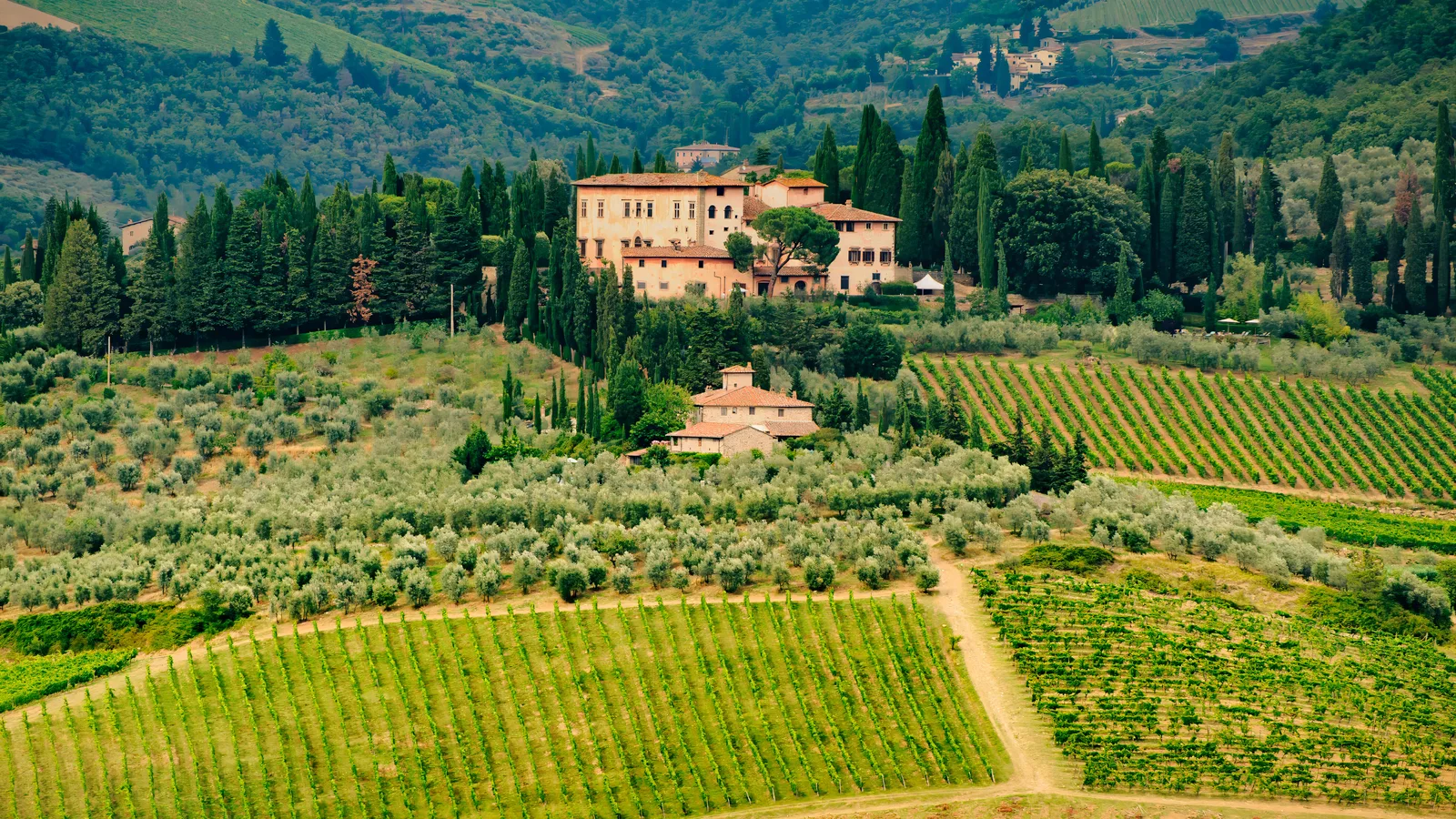
Chianti Classico is the historic heart of Chianti, a zone of about 71,800 hectares (roughly 177,000 acres) of land between the cities of Florence and Siena, shared between the two provinces. According to the Consorzio Vino Chianti Classico, the producers' consortium, the zone takes in the whole of four communes, Castellina in Chianti, Gaiole in Chianti, Greve in Chianti and Radda in Chianti, and parts of four more: Barberino Tavarnelle, Castelnuovo Berardenga, Poggibonsi and San Casciano Val di Pesa.
Plain Chianti is a different, larger appellation spread across much of central Tuscany, with its own subzones and its own production rules. Both are mostly Sangiovese, the red grape behind much of Tuscany's wine, which tends to give firm acidity, red cherry fruit and a savory, slightly earthy edge.
The Black Rooster
The consortium was founded on May 14, 1924, in Radda in Chianti, and its emblem is the Black Rooster, the Gallo Nero. Look for it on the bottle: the rooster marks Chianti Classico. A bottle of Chianti without it, from outside the Classico zone, is the other appellation.
Three levels of Chianti Classico
The consortium's published rules set three categories, and each is a step up in grape content, aging and alcohol:
- Chianti Classico (often called Annata, meaning the basic vintage wine): at least 80 percent Sangiovese, with up to 20 percent other approved red grapes; at least 12 months of aging before release; at least 12 percent alcohol.
- Chianti Classico Riserva: the same grape rule; at least 24 months of aging, including three months in bottle; at least 12.5 percent alcohol.
- Chianti Classico Gran Selezione: at least 90 percent Sangiovese, with up to 10 percent native Italian red grapes; at least 30 months of aging, including three in bottle; at least 13 percent alcohol. It must be made only from the estate's own grapes and bottled at the estate, from a single vineyard or a selection of its best grapes.
Those minimums are why a Gran Selezione costs more than a basic Chianti Classico from the same estate: more of the top grape, more time in the cellar before release, and only the producer's own fruit.
Village names are coming to the label
The consortium has also mapped eleven smaller areas inside the zone, called Unità Geografiche Aggiuntive (UGAs, or additional geographic units). Once approved, a producer may add one of these names to the label, so a buyer can see which part of the zone a wine came from. In this first phase the consortium says the UGA names apply only to Gran Selezione.
At the shop
For a weeknight red with pasta or pizza, a basic Chianti Classico is the place to start. For a holiday roast, a Riserva gives you a wine with more age behind it. Check the neck or label for the Black Rooster, then read the category word: nothing, Riserva or Gran Selezione.
Loading comments…