












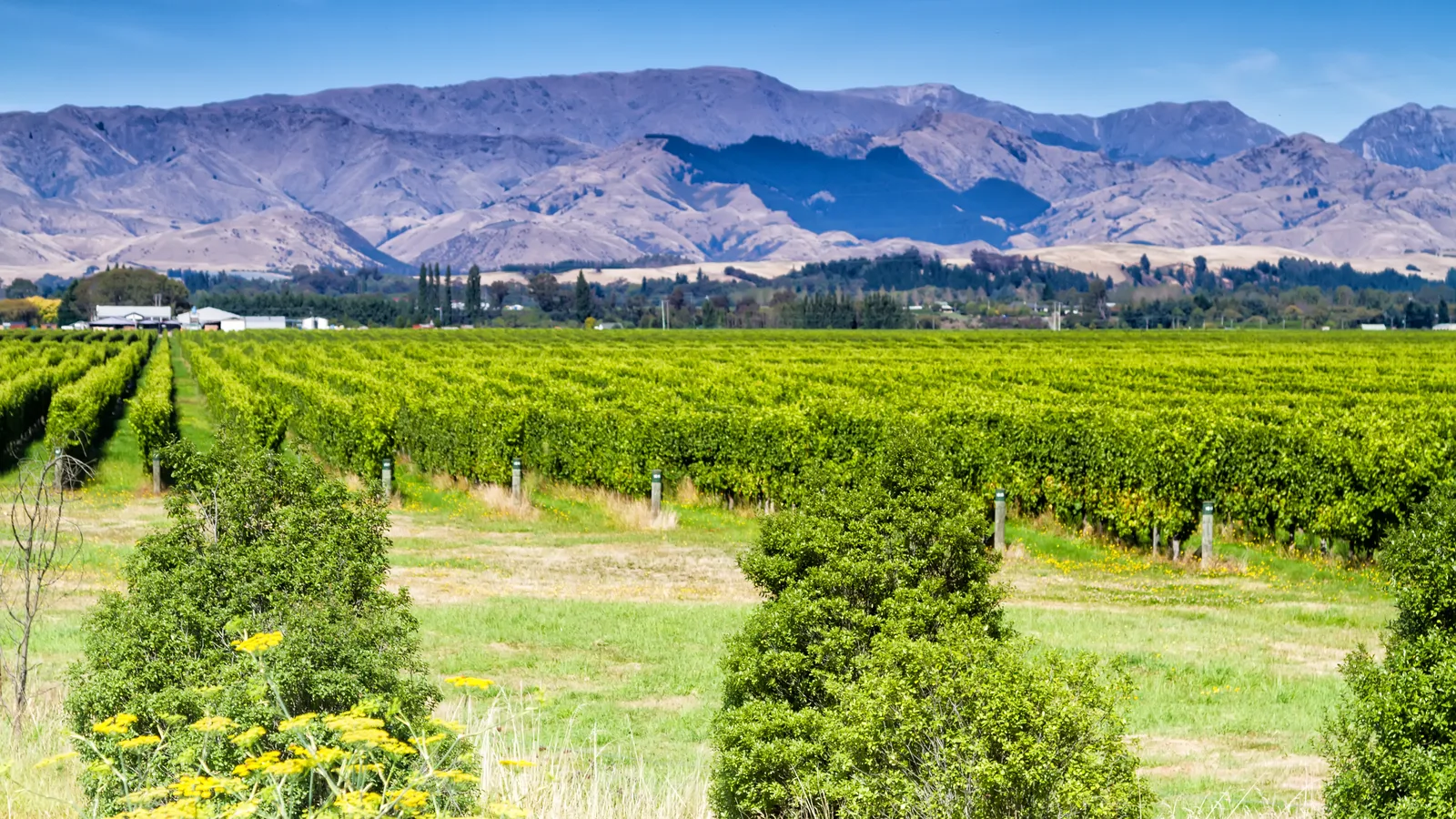
Marlborough Sauvignon Blanc is one of the easiest wines to find in an American store: a pale, zesty white from the top of New Zealand's South Island, on the shelf at nearly every price. What the front label rarely says is that Marlborough is not one place. It has three subregions with different soils and weather, and some producers print their names on the back label.
How big Marlborough is
According to New Zealand Winegrowers, the national industry body, Marlborough has almost 31,000 hectares of vines (about 76,000 acres), roughly two thirds of all the vineyard land in the country, which makes it New Zealand's largest wine region. It was Marlborough Sauvignon Blanc that put New Zealand on the international wine map in the 1980s.
The industry body describes the climate as cool but very sunny, with low rainfall and free-draining, moderately fertile soils. Cool weather keeps acidity in the grapes; long sunny days ripen them. That combination is behind the style most shoppers know: high acidity and pungent aromas often described as citrus, passion fruit and freshly cut grass.
The three subregions
Wairau Valley. The broad valley most of Marlborough's vineyards sit in. Its soils are largely old, gravelly riverbed. New Zealand Winegrowers notes the range inside it: cooler, drier inland sites, stony sites that ripen early, and coastal sites cooled by sea breezes.
Southern Valleys. A set of smaller valleys running south off the Wairau: Omaka, Fairhall, Brancott, Ben Morven and Waihopai. Their soils are generally heavier, with more clay than the Wairau's gravels, and they get cooler and drier the farther south you go. The area is known for Pinot Noir and aromatic whites such as Riesling, Pinot Gris and Gewürztraminer as well as Sauvignon Blanc.
Awatere Valley. South of the Wairau, and in the industry body's words the most geographically distinct of the three: cooler, drier and windier, with some vineyards at higher elevation and typically lower yields. It is known for both Sauvignon Blanc and Pinot Noir.
Reading the bottle
The front label will almost always say Marlborough. Turn the bottle around: a back label or the producer's website will often name the valley, and sometimes the vineyard. A wine labeled Awatere Valley comes from the region's coolest, windiest corner; a Southern Valleys wine from clay-rich slopes; a Wairau wine from the main valley floor. Many larger bottlings blend grapes from across the region.
Marlborough also grows Pinot Noir and Chardonnay, so the same three names show up on its reds and other whites.
Something to try
For a side-by-side at home, buy two Marlborough Sauvignon Blancs whose producers name different subregions, chill both to the same temperature, and pour them together. It is the simplest way to see what a region's small print means in the glass.
Loading comments…