










For decades the oldest age a tawny Port could state on its label was 50 years. In January 2025 that changed. The Instituto dos Vinhos do Douro e do Porto (IVDP), the public body that certifies Port and approves every Port label, created a new age indication, 80 Years Old, and producers have been releasing wines under it ever since. Here is what the number means and how to read it on a shelf or a wine list.
What the rule says
The change came in the IVDP's Circular No. 1/2025, signed in Peso da Régua on January 22, 2025. It records that the institute's interprofessional council, which brings together growers and Port shippers, unanimously approved the 80-year indication at its meeting on October 30, 2024, and it makes the indication effective immediately. The circular does two things for very old tawnies:
- It creates the mandatory quality indication 80 anos de idade (80 years of age) within the special category of Port with an indication of age.
- It sets Very Very Old, written VVO or W, as the mandatory indication for wines of 80 years or more that do not state an age.
Before this, the age-dated tawny ladder stopped at 50. A house holding older wine could bottle it with a vintage date as a Colheita, or sell it without an age on the label.
What 80 Years Old actually promises
An age on a tawny Port is not a vintage. A tawny labeled 10, 20, 30, 40, 50 or now 80 Years Old is a blend of Ports from different harvests, put together by the house's blender to show the character of wine that has spent that long in wood. The IVDP's tasting panel approves each age-dated wine before it can carry the indication, so the number is a statement about style and maturity that the regulator has signed off on, rather than the age of the youngest or oldest wine in the bottle.
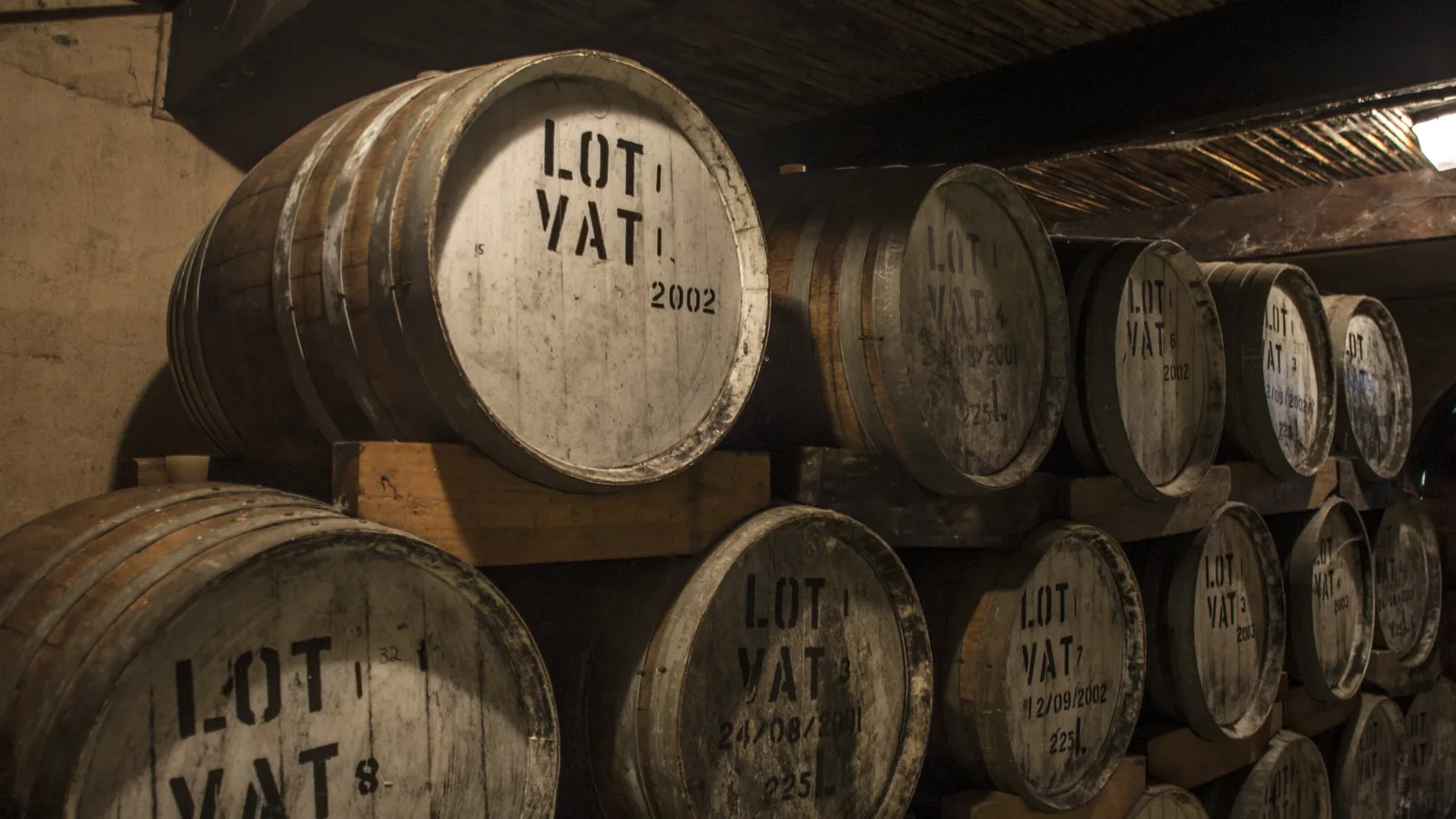
Time in cask is what defines a tawny. The wine ages in wooden casks, often called pipes, that are small enough for slow, steady contact with air through the wood. Over decades the color moves from red to amber and brown, the fruit shifts from fresh berries toward dried fruit, nuts, caramel and spice, and some of the water evaporates, so the wine concentrates. At 80 years that process has gone very far, and the quantities left are small.
The first releases
The first wines in the category came from the large Port houses, each in small numbers:
- Taylor's Victory Port, released to mark 80 years since the end of the Second World War, is an 80 Year Old Tawny limited to 1,945 individually numbered bottles. The house says it was aged for eight decades in oak casks.
- Graham's 80 Years Old joins the house's Aged Tawny Collection beside its 40 and 50 Year Old. Graham's says head winemaker Charles Symington first blended it to mark the 80th birthday of his father, Peter Symington.
- Quinta do Vallado's 80 Years Old Tawny is listed by the producer at 20 percent alcohol and aged in Port casks of about 600 liters.
Expect more: once a category exists, every house with old stock can apply to use it.
Buying and serving one
These are rare bottlings made in the hundreds or low thousands of bottles, sold in small formats at high prices, and most reach the United States through a handful of fine wine retailers. If you see one, check three things on the label: the words 80 Years Old (or 80 anos), the producer, and the bottling date, which tawnies usually print because the wine is ready to drink when it is bottled and does not need further aging.
A tawny of any age is typically served lightly cool rather than at room temperature, in a small pour, after dinner or with a cheese course. An opened bottle of aged tawny holds up far longer than an opened table wine, because it has already spent its life in contact with air. For a first taste of the style, a 10 or 20 Year Old Tawny from the same houses costs a small fraction of the price and shows the same nutty, dried fruit direction.
Loading comments…