



Barolo and Barbaresco come from the same grape, grown a few miles apart in the same hills of Piedmont in northwest Italy. The difference a shopper can count is time: the official rules make Barolo wait longer before it can be sold. Here is how the two compare, using the production rules filed with Italy's agriculture ministry and the consortium that protects both names.
One grape: Nebbiolo
Both wines must be made entirely from Nebbiolo. The production rules (each wine's disciplinare, its legal specification) allow no other variety. Both are red only, and both must list the vintage on the label.
Both are also DOCG wines. DOCG, Denominazione di Origine Controllata e Garantita, is Italy's top tier of protected origin, with rules covering where the grapes grow, how much each vineyard can yield, how long the wine ages, and how it is labeled. The Consorzio di Tutela Barolo Barbaresco Alba Langhe e Dogliani, the producers' consortium based in Alba, protects nine denominations in the area, four DOCG and five DOC, with Barolo and Barbaresco among them. The Barbaresco rules note that both names were among Italy's first recognized denominations, in 1966; the Consorzio dates Barbaresco's DOCG status to 1980.
The Langhe hills
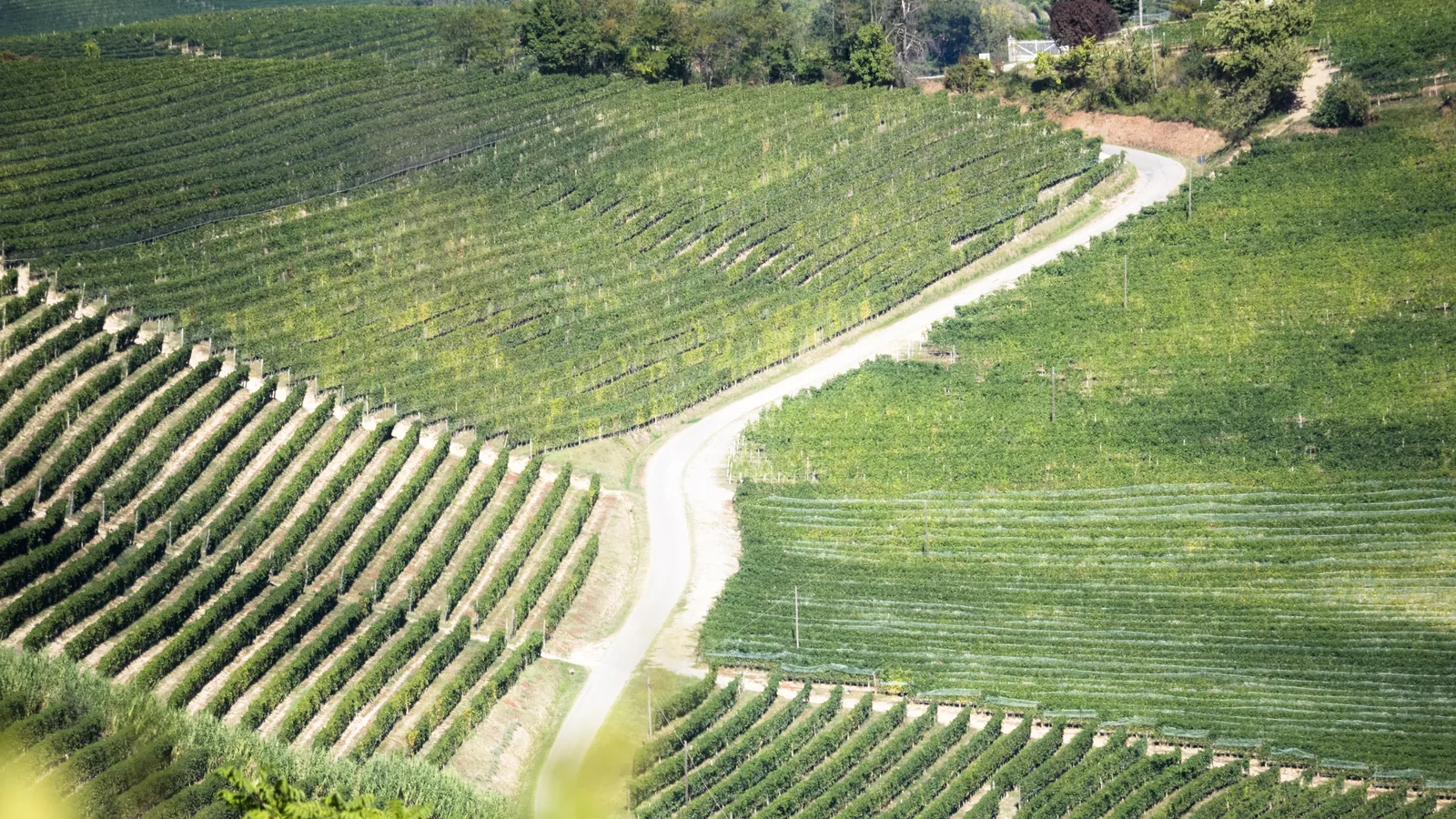
Both wines come from the Langhe, the hills around the town of Alba in the province of Cuneo. The specifications describe hills of calcareous marl and sand above the Tanaro River, and require that vineyards be on hillsides, never on damp, flat valley floors.
- Barolo comes from 11 municipalities south of Alba. Barolo, Castiglione Falletto and Serralunga d'Alba are entirely inside the zone; La Morra, Monforte d'Alba, Novello, Verduno, Grinzane Cavour, Diano d'Alba, Cherasco and Roddi are partly inside. Vineyards must sit between 170 and 540 meters above sea level.
- Barbaresco comes from three municipalities northeast of Alba (Barbaresco, Neive and Treiso) plus a small part of Alba itself. Vineyards may be no higher than 550 meters, and north-facing slopes are excluded.
The aging rules, side by side
Aging in both rulebooks is counted from November 1 of the harvest year, and each sets a date before which the wine cannot be released for sale.
- Barolo: at least 38 months of aging, 18 of them in wood. Release no earlier than January 1 of the fourth year after the harvest.
- Barolo Riserva: at least 62 months, 18 in wood. Release no earlier than January 1 of the sixth year after the harvest.
- Barbaresco: at least 26 months, 9 in wood. Release no earlier than January 1 of the third year after the harvest.
- Barbaresco Riserva: at least 50 months, 9 in wood. Release no earlier than January 1 of the fifth year after the harvest.
In practice, a 2022 Barbaresco could go on sale from January 1, 2025, and a 2022 Barolo from January 1, 2026. A 2022 Barolo Riserva has to wait until January 1, 2028. In both wines, Riserva is requested by the producer at certification, once the longer aging period is complete.
The minimum alcohol at release also differs: 13 percent for Barolo and 12.5 percent for Barbaresco.
Single-vineyard names on the label
Both rulebooks list official vineyard areas called menzioni geografiche aggiuntive (MGA, additional geographical mentions), delimited in 2010 according to the Consorzio. In Barolo the list runs to well over a hundred names, including Cannubi, Brunate, Bussia and Monprivato; in Barbaresco it includes Asili, Rabajà, Montestefano and Ovello. An MGA must appear directly below the wine's name and cannot be printed larger than it. A producer may add the word vigna and a vineyard name only alongside an MGA, with lower yield limits and the wine made and kept separately.
Both rulebooks also ban extra descriptors on the label, such as extra, fine, scelto, selezionato or vecchio, so the official terms are the ones that count.
How the two compare in the glass
The official specifications describe both wines at release in similar terms: garnet in color, intense, dry and full. The Barbaresco text adds orange reflections and a velvety texture. Its rules also distinguish the hills of Barbaresco and Neive, which it describes as giving structure and tannic power on one side and softness and ripe fruit on the other, from the hills of Treiso, which it ties to finesse and elegance. The Barolo text points to the structure that lets the wine develop over time.
Your next step
When you shop, check the vintage against the release rules: a Barbaresco from the 2023 harvest became eligible for sale on January 1, 2026, while a 2023 Barolo has to wait until January 1, 2027. If a label carries an MGA, search that name on the producer's own site to see which hill it comes from.
Sources
- Consorzio di Tutela Barolo Barbaresco Alba Langhe e Dogliani: Protected denominations
- Consorzio di Tutela Barolo Barbaresco Alba Langhe e Dogliani: Barolo DOCG
- Consorzio di Tutela Barolo Barbaresco Alba Langhe e Dogliani: Barbaresco DOCG
- Italian Ministry of Agriculture (MASAF): Barolo DOCG consolidated specification, March 4, 2026
- Italian Ministry of Agriculture (MASAF): Barolo DOCG disciplinare (PDF, in Italian)
- Italian Ministry of Agriculture (MASAF): Barbaresco DOP specification documents
- Italian Ministry of Agriculture (MASAF): Barbaresco DOCG consolidated disciplinare (PDF, in Italian)
Loading comments…