






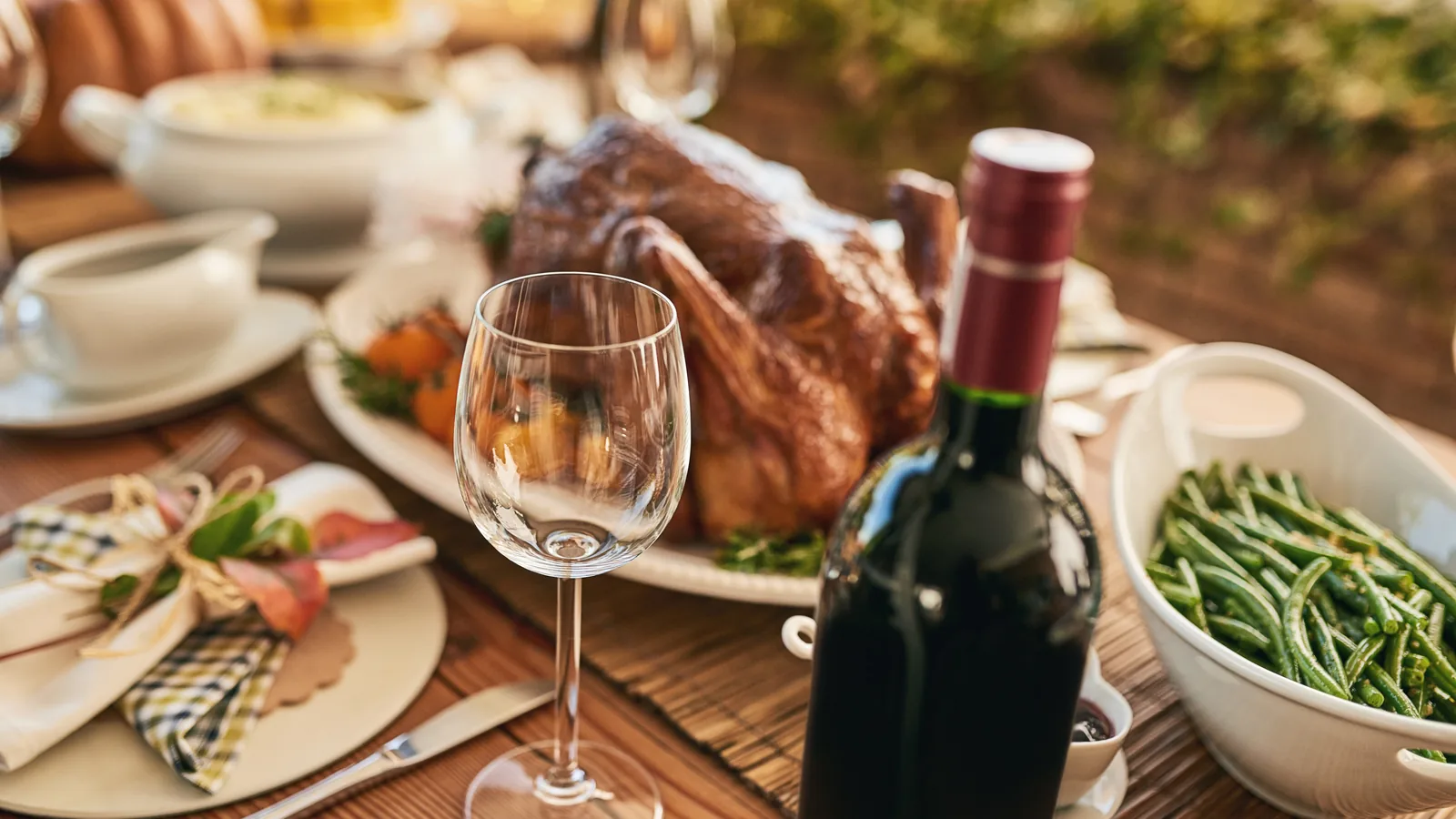
Thanksgiving falls on November 26 this year, and the wine question is harder than it looks. The turkey is mild, but the plate around it is not: sweet-tart cranberry, herb stuffing, buttery potatoes, gravy, maybe sweet potatoes with marshmallows. No single bottle matches every bite, so the goal is a wine that stays out of the way of all of them. Four traits do most of the work: bright acidity, clear fruit, low tannin and moderate alcohol.
The four traits, and why they matter on this plate
Acidity is the fresh, mouthwatering quality in a wine, the same thing you notice in a squeeze of lemon. It cuts through fat, which is why the Oregon Wine Board's Thanksgiving pairing guide leans on it for turkey with gravy and for creamy mashed potatoes.
Fruit keeps a wine from tasting thin next to cranberry sauce. In a Thanksgiving guide published by the Lodi Winegrape Commission, the commission's writer makes clear, fruit-forward flavor the first thing to look for, and notes that soft, fruity reds and pinks blend in with cranberry relish and herb stuffing where big reds can taste harsh.
Tannin is the drying, grippy feel that comes from grape skins, seeds and oak. The same Lodi guide points out that heavy, tannic, heavily oaked reds tend to clash with turkey and its rich sides. A lighter touch works better.
Moderate alcohol helps a wine feel balanced beside food rather than hot, especially next to sweet or peppery dishes. It is a tiebreaker rather than a rule: the Lodi guide counts both a 13% Grenache and a 16% Zinfandel as good turkey wines, as long as the fruit is clear and the tannin is soft.
Pinot Noir
Pinot Noir is the red most often suggested for turkey, and the reasoning is acidity and red fruit. The Oregon Wine Board's guide pairs Willamette Valley Pinot Noir with roast turkey and herb stuffing, crediting its acidity with cutting through the meat's richness and its red berry and earthy notes with echoing sage, thyme and rosemary. For guests who prefer a fuller red, the guide points to Pinot Noir from the warmer Rogue Valley in southern Oregon.
Beaujolais and other Gamay
Beaujolais is made from Gamay. The region's trade body, Inter Beaujolais, describes Gamay as an early-ripening grape that makes supple, fruit-forward wines that are lower in alcohol, with raspberry, strawberry and cherry aromas. Beaujolais Nouveau, the region's youngest wine, is released on the third Thursday of November, which this year is November 19, one week before Thanksgiving. The region's own pairing page lists a turkey dish with Beaujolais, and its serving guide recommends Nouveau at about 54°F and regular Beaujolais reds at about 55 to 57°F, so a few minutes in the fridge before dinner is part of the plan.
Dry Riesling
Riesling covers everything from bone-dry to dessert-sweet, so read the label. On German bottles, trocken means dry. Wines of Germany explains that a trocken wine generally has no more than 4 grams of residual sugar per liter (leftover grape sugar), with up to 9 grams allowed when the wine's acidity is high enough to balance it. Halbtrocken means off-dry. The Oregon guide offers an off-dry Riesling as an alternate for herb stuffing, for its crisp acidity and stone fruit, and the Lodi guide lists Riesling among the zesty whites that suit sausage or seafood stuffings.
Sparkling wine
Bubbles and acidity together refresh the palate, which is why the Oregon guide puts sparkling wine with the cheese plate and appetizers. Rosé sparkling wine has the structure to stay at the table: the Comité Champagne names Champagne Rosé with roast fowl as its favorite pairing for the style.
Zinfandel
Zinfandel is the guest-pleaser for anyone who wants a fuller red. The Lodi Winegrape Commission recommends the gentle, red-berry style of Lodi Zinfandel for the holiday. What matters most is keeping tannin and oak in check, so look for bottles described as fruit-forward rather than oak-aged or high in tannin.
Putting it together for a mixed table
- Open a sparkling wine while people arrive and snack.
- Put one red and one white on the table: a Pinot Noir or Beaujolais beside a dry or off-dry Riesling covers the most dishes.
- Add a Zinfandel if your crowd leans toward fuller reds.
- Chill the whites and sparkling well, and give lighter reds a short chill so they stay fresh.
- Have a few bottles of something without alcohol on the table too, so every guest has a glass to raise.
Next step
Write down your menu, then take it to your wine shop this week and ask for a Pinot Noir or Gamay with low tannin and a Riesling labeled trocken or halbtrocken. Shopping by the end of the weekend before Thanksgiving leaves time for the whites to chill.
Sources
- Oregon Wine Board: Oregon wine and Thanksgiving pairing guide
- Lodi Winegrape Commission: The ideal wines for Thanksgiving turkey
- Inter Beaujolais: Gamay grape variety
- Inter Beaujolais: Nouveau by Beaujolais
- Inter Beaujolais: Serving temperatures
- Inter Beaujolais: Food and Beaujolais wine pairing
- Wines of Germany: Levels of sweetness in German wines
- Comité Champagne: Champagne Rosé
Loading comments…