



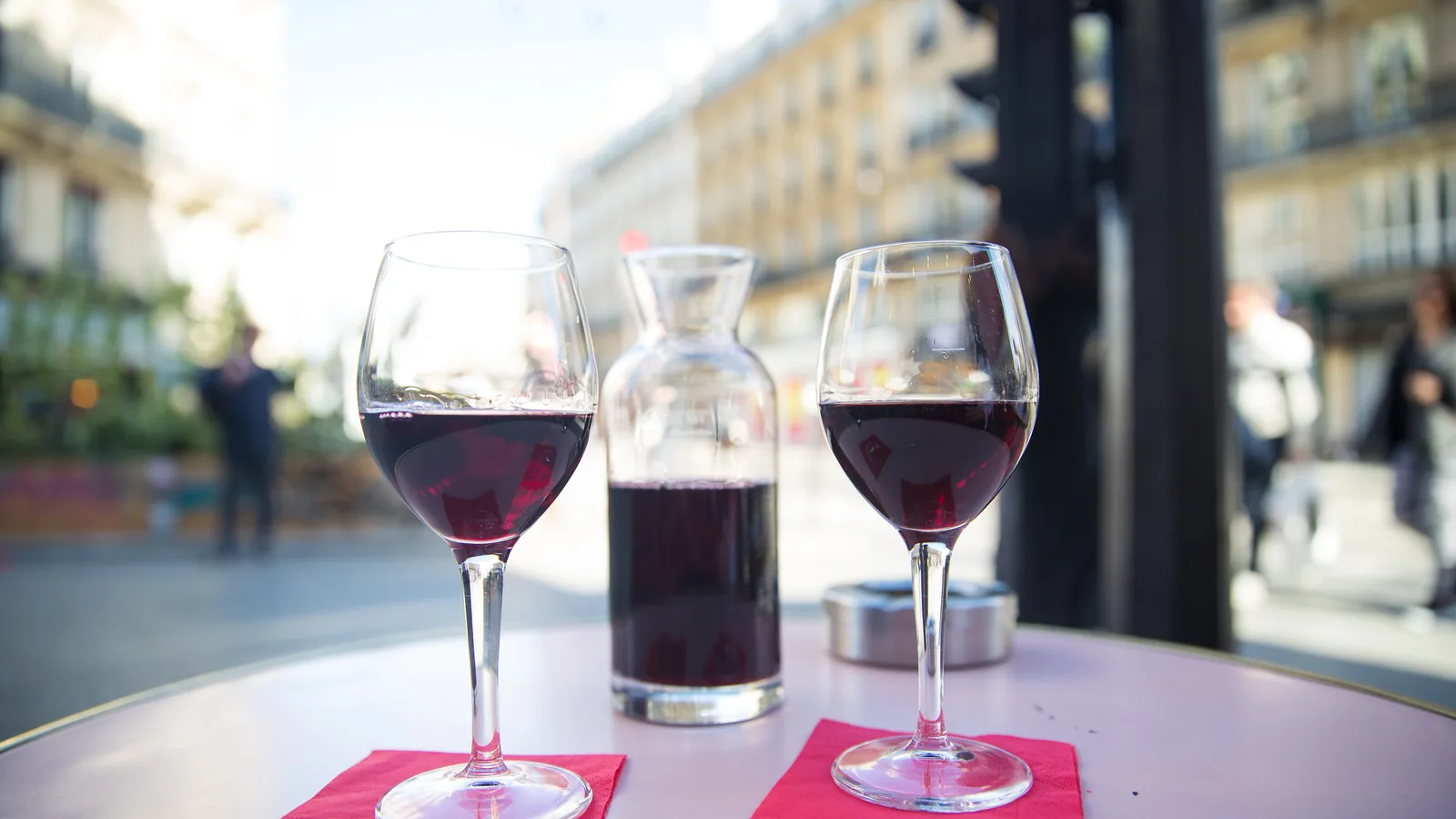
The 2026 Beaujolais Nouveau is released on Thursday, November 19. The date follows a fixed rule: Inter Beaujolais, the region's official wine council, states that Nouveau wines from Beaujolais are released on the third Thursday of November each year, and this year that falls five days from now and one week before Thanksgiving.
Nouveau is wine from this fall's harvest, picked only weeks ago and bottled to drink young. Here is what is in the bottle and how it differs from the rest of Beaujolais.
The grape: Gamay
Beaujolais red is made from Gamay, in full Gamay noir à jus blanc: a black grape with white juice. Inter Beaujolais describes it as a natural cross between Pinot Noir and Gouais Blanc that has been grown in the region since the early 17th century. Of the roughly 30,000 hectares of Gamay planted worldwide, about half are in Beaujolais, where the grape covers 98% of the area producing Beaujolais wine.
The council describes Gamay as an early-ripening variety with thin, purple-black skins that gives lively, brightly colored reds, usually with fruity aromas such as raspberry, wild strawberry, blackberry and black cherry, and sometimes peppery or floral notes. It grows best on granite, though it adapts to other soils. The region itself runs about 34 miles north to south, with Lyon less than a half-hour drive away.
How Nouveau is made so fast
The method behind most Beaujolais red, Nouveau included, is called semi-carbonic maceration, a term Inter Beaujolais says is specific to the region. It is a variation on carbonic maceration, in which whole grapes ferment inside their own skins in a tank filled with carbon dioxide.
The grapes are picked by hand and go into the vat as whole, uncrushed bunches, still on their stems. The council says that whole-bunch step contributes much of the wine's fruity aroma. Inside the vat, three things happen at once:
- At the top, bunches sit in carbon dioxide given off by the fermenting juice below, which pushes out the oxygen, and fermentation starts inside each intact berry.
- In the middle, bunches soak in juice, which draws out color, tannin and aroma.
- At the bottom, crushed grapes release juice that yeasts ferment in the usual way, turning sugar into alcohol and more carbon dioxide.
Unlike classic carbonic maceration, the vat is not sealed and no carbon dioxide is added; the gas comes from the fermentation itself. After maceration, the free-run juice is drawn off, the grapes are pressed, and the two are blended to finish fermenting.
Time on the skins is what separates Nouveau from the rest. According to Inter Beaujolais, maceration lasts 4 to 6 days for the primeur wines (Beaujolais Nouveau and Beaujolais Villages Nouveau), 6 to 10 days for Beaujolais and Beaujolais Villages, and about 10 to 15 days for the crus. Short skin contact keeps Nouveau light in tannin and focused on fresh fruit.
Nouveau versus the crus
Beaujolais has 12 appellations. The two regional ones, Beaujolais and Beaujolais Villages, sit generally in the south of the region and are where Nouveau comes from. The other ten are the crus, communal appellations in the north named for their villages:
- Brouilly and Côte de Brouilly
- Chénas, Chiroubles and Juliénas
- Fleurie and Morgon
- Moulin-à-Vent, Régnié and Saint-Amour
The crus are not released on the third Thursday. With the longest skin contact in the region, they are made for drinking later, and their labels usually show the village name in large type with the word Beaujolais in smaller print or not at all. If you see Morgon or Fleurie on a label, you are looking at a cru, not Nouveau.
Serving it
Inter Beaujolais describes Nouveau as juicy and fruit-forward and presents the release as a convivial November gathering. The council's general guidance is that Beaujolais reds and rosés go with Lyonnais cooking and with dishes from around the world, including Asian food. With Thanksgiving a week after the release, Nouveau's light tannin and bright fruit make it an easy option for a table with turkey and many sides. Like most light reds, it shows best with a slight chill.
Where to find it
Look for bottles to reach shops from Thursday, November 19. Ask the wine department whether it has both Beaujolais Nouveau and Beaujolais Villages Nouveau, and if you want to compare, pick up a bottle of one of the ten crus beside it. Tasting a Nouveau next to a Morgon or Moulin-à-Vent is the quickest way to see what a few extra days on the skins and more time in the cellar do to the same grape.
Loading comments…