





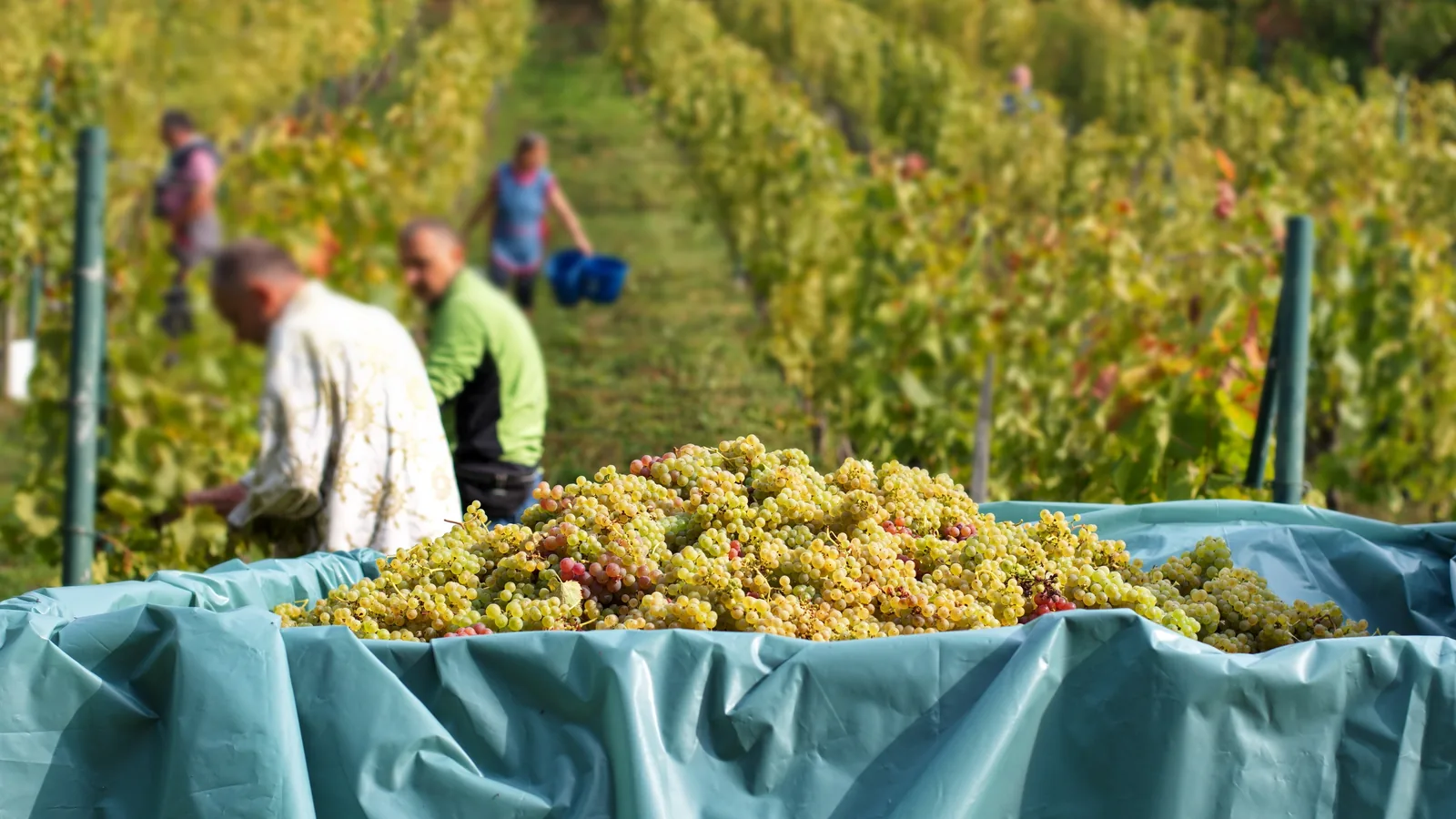
California's North Coast wine country has finished one of its earliest harvests on record, and one of its smallest in years. Sonoma County Winegrowers, the county's grape commission, estimates the 2026 Sonoma County harvest at 35% to 40% lighter than average. In neighboring Napa Valley, the first grapes came in during July, a month that only two earlier Napa vintages had seen.
For wine drinkers, harvest is the start of every bottle: the vintage on a label is the year the grapes were picked. Here is what growers and wineries in both counties have reported about 2026.
Sonoma County: early, and short on fruit
In its October 19 harvest report, Sonoma County Winegrowers said picking began on July 16 at Dutton Ranch in the Green Valley and Russian River Valley American Viticultural Areas (AVAs, the federally recognized grape-growing regions). It was the first pick in the county this year and the earliest that grower had ever started.
The commission's growers traced the timing and the small crop to the weather:
- Warm weather in late February and March woke the vines early.
- Cool, wet and windy weather during bloom, when the vines flower and set fruit, stretched flowering out by several weeks and reduced yields.
Some vineyards came in far below normal. Munselle Vineyards in the Alexander Valley reported its Chardonnay at about 10% to 15% under its five-year average and some Sauvignon Blanc blocks at around half of their five-year average. The same grower picked all of its white grapes in August for the first time, an estimated four to five weeks earlier than usual, and finished its reds by October 12, also a first.
The commission said early reports on quality are positive and that wineries are buying additional grapes to meet demand. Sonoma County has more than 1,800 grape growers across 19 AVAs, according to the group.
Napa Valley: July picks and a smaller Cabernet set
In Napa, Chandon California reported that it started picking on July 24 with 30 tons of Chardonnay for sparkling wine from its Yountville estate, the earliest first pick in the winery's 53 years in the valley. Its previous earliest start was August 3, 2021, and the winery noted that only the 2014 and 2015 vintages had also begun in July.
Chandon gave a similar weather account to Sonoma's: an extremely warm March pushed the vines to bud early, followed by a cooler April and an unusually wet spring that ran into June. Wind and rain during flowering hit Cabernet Sauvignon, while Chardonnay and Pinot Noir were largely spared and set fruit better. The winery reported its sparkling-wine yields at roughly 15% to 20% below early expectations, with smaller clusters.
On November 10, Napa Valley Vintners and the Napa Valley Grapegrowers held a joint briefing on the vintage, focused on its early timing and smaller crop. Their Harvest Napa Valley updates through the fall included reports of an earlier-than-usual pick at Amizetta, above Lake Hennessey, and a lighter Cabernet Sauvignon crop at Nickel and Nickel in Rutherford. Napa Valley Vintners notes that the valley produces about 4% of California's wine grape harvest.
What it means for the bottles you buy
- Timing: wines made to drink young from these counties, such as rosé and many whites, typically reach shelves first, often the year after harvest. Cabernet Sauvignon usually spends time in barrel before release, and traditional-method sparkling wine ages on its lees for longer still, so 2026 bottles of those styles will arrive over the next several years.
- Quantity: a crop 35% to 40% under average in Sonoma County means less 2026 wine from some vineyards. How that shows up for buyers will depend on each producer and on how much wine from earlier vintages is still in the market.
- Style: growers in both counties describe early quality as promising. Treat that as a first read; vintage character is clearer once the wines are finished.
Follow along
To see how the vintage develops, check Sonoma County Winegrowers' news page and Harvest Napa Valley's updates over the coming months. When 2026 wines from these counties start to appear, look at the vintage year on the label and ask your shop how much of a given wine was made, since in a short year some bottlings will be smaller.
Sources
- Sonoma County Winegrowers: Historically early harvest sets the stage for the 2026 vintage (October 19, 2026)
- Chandon California: Earliest harvest, 2026 harvest report
- Napa Valley Vintners and Napa Valley Grapegrowers (Harvest Napa Valley): 2026 vintage briefing
- Harvest Napa Valley: 2026 harvest updates
- Napa Valley Vintners: About the Napa Valley
Loading comments…