





The sparkling wine shelf gets crowded in late November, and the names can blur together. Here is the short version: Champagne, Cava and Crémant get their bubbles in the bottle, Prosecco gets them in a pressurized tank, and the word on the label that tells you how sweet it is does not always mean what it sounds like.
Two ways to make the bubbles
Every sparkling wine starts as a still wine. The bubbles come from a second fermentation: add sugar and yeast, the yeast turns the sugar into alcohol and carbon dioxide, and if the gas cannot escape it dissolves into the wine.
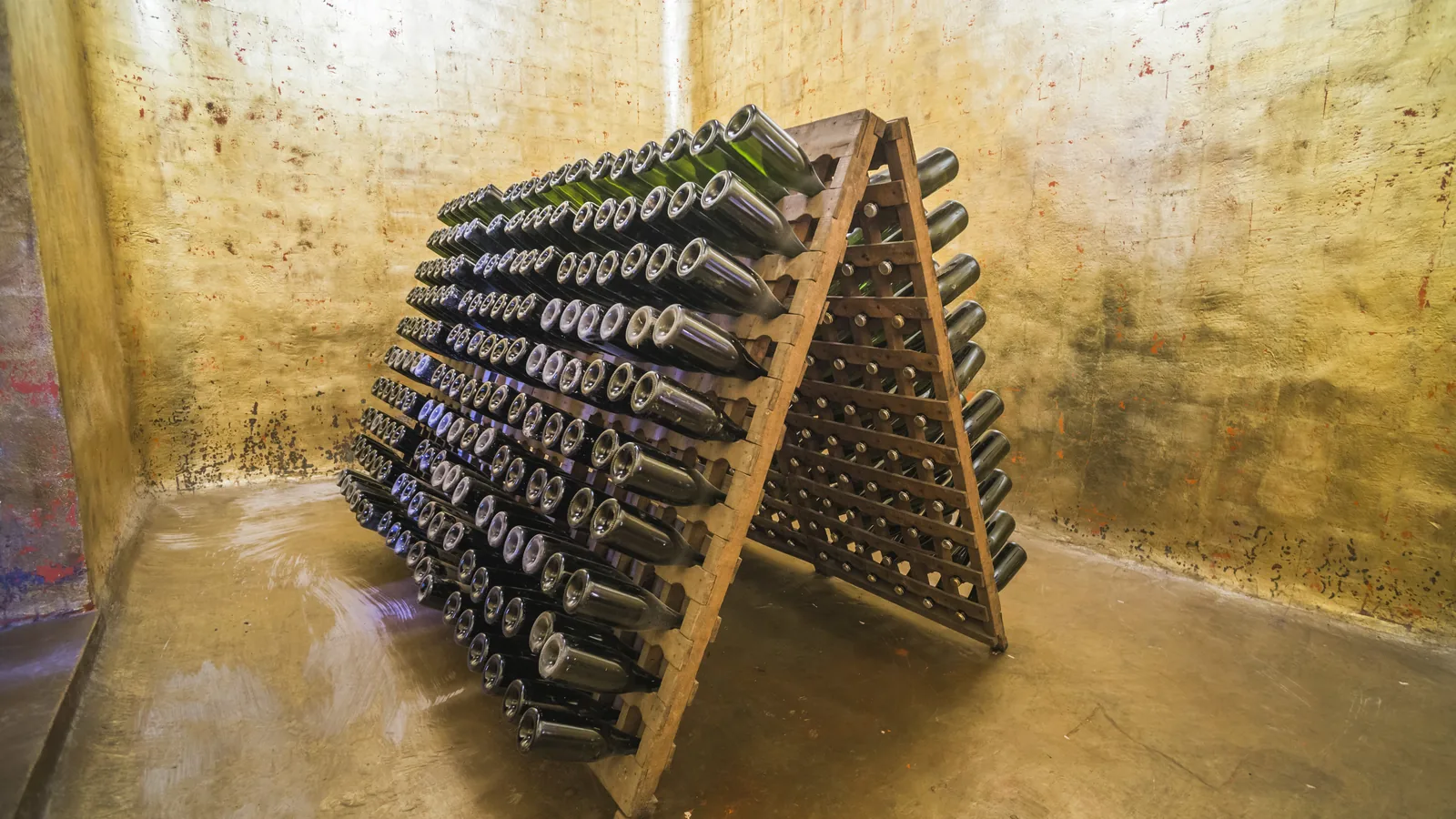
The traditional method runs that second fermentation inside the bottle you eventually buy. The Comité Champagne, the trade body for Champagne, calls this step prise de mousse. The wine then rests on the spent yeast (the lees) for months or years. Bottles are turned in racks so the sediment slides into the neck, the neck is frozen, and the plug of sediment is pushed out by the pressure. That last step is disgorgement. A small dose of sweetened wine, the dosage, tops up the bottle before the final cork goes in.
The tank method runs the second fermentation in a large, sealed steel tank and then bottles the finished sparkling wine under pressure. It is quicker and keeps the focus on fresh fruit aromas rather than the bready, toasty notes that long time on the lees can bring.
Champagne
Champagne comes only from the Champagne appellation in northeastern France, about 34,200 hectares roughly 90 miles northeast of Paris, according to the Comité Champagne. Pinot Noir, Meunier and Chardonnay make up nearly all the vines. The rules require non-vintage Champagne to age at least 15 months in the cellar and vintage Champagne at least 3 years, counted from bottling, and many houses go longer. A bottle holds about 5 to 6 bar of pressure, around three times a car tire.
Prosecco
Prosecco is Italian, made in nine provinces across Veneto and Friuli Venezia Giulia. The Consorzio di Tutela della DOC Prosecco's production rules say the wine is based on the Glera grape, with other permitted varieties capped at 15% for the white styles. Sparkling Prosecco (spumante) must be made only by natural fermentation in an autoclave, the rules' term for the pressure tank. Prosecco Rosé, which adds 10% to 15% Pinot Noir, must spend at least 60 days in that process.
Cava
Cava is Spain's traditional-method sparkling wine. The DO Cava regulatory council requires the traditional method for every bottle and sets minimum aging by tier: at least 9 months for Cava de Guarda, at least 30 months for Gran Reserva, and at least 36 months for Cava de Paraje Calificado, a single-site category. Gran Reserva may only be made in the Brut Nature, Extra Brut and Brut styles.
Crémant
Crémant is the name several French regions outside Champagne use for their own traditional-method sparkling wines. Crémant de Bourgogne is a clear example. Bourgogne Wines, the Burgundy wine council, explains that the base wine gets a second fermentation in the bottle, then matures for at least 9 months plus 3 more months before release, with riddling, disgorgement and dosage just as in Champagne. Chardonnay and Pinot Noir lead, and Gamay, Aligoté and other Burgundy grapes are allowed.
Brut, Extra Dry and the sweetness words
The dosage decides how sweet the finished wine is, and the label states the category. The Comité Champagne publishes these limits, in grams of sugar per liter:
- Brut Nature: under 3, with no sugar added
- Extra Brut: 0 to 6
- Brut: under 12
- Extra Dry: 12 to 17
- Sec: 17 to 32
- Demi-Sec: 32 to 50
- Doux: more than 50
The DO Cava council lists the same bands, with the Spanish names Extra Seco, Seco, Semi Seco and Dulce. The part that trips people up: Extra Dry is sweeter than Brut. If you want the driest bottle, look for Brut, Extra Brut or Brut Nature. Prosecco's rules list the same family of terms, from Brut Nature through Demi-Sec.
Serving it
The Comité Champagne recommends serving Champagne at 46°F to 50°F (8°C to 10°C), chilled but not ice cold. An ice bucket about half full of ice and water does it in 20 to 30 minutes, or leave the bottle in the bottom of the refrigerator for a few hours. To open, take off the foil and wire cage, keep a firm grip on the cork, point the bottle away from everyone, and turn the bottle rather than the cork so it eases out. A tulip-shaped glass shows the aromas better than a narrow flute, the committee adds, though either works. An opened bottle keeps a day or two with an airtight stopper.
Before you shop
Decide two things first: method and sweetness. For toasty, yeasty notes, look for Champagne, Cava or Crémant, and for fresh fruit and a lighter price, Prosecco. Then check the sweetness word. For a dry toast, choose Brut or drier; for a bottle to serve with dessert or a cheese course, Demi-Sec fits. Chill it the afternoon of the gathering, and you are set for Thanksgiving on November 26.
Loading comments…