





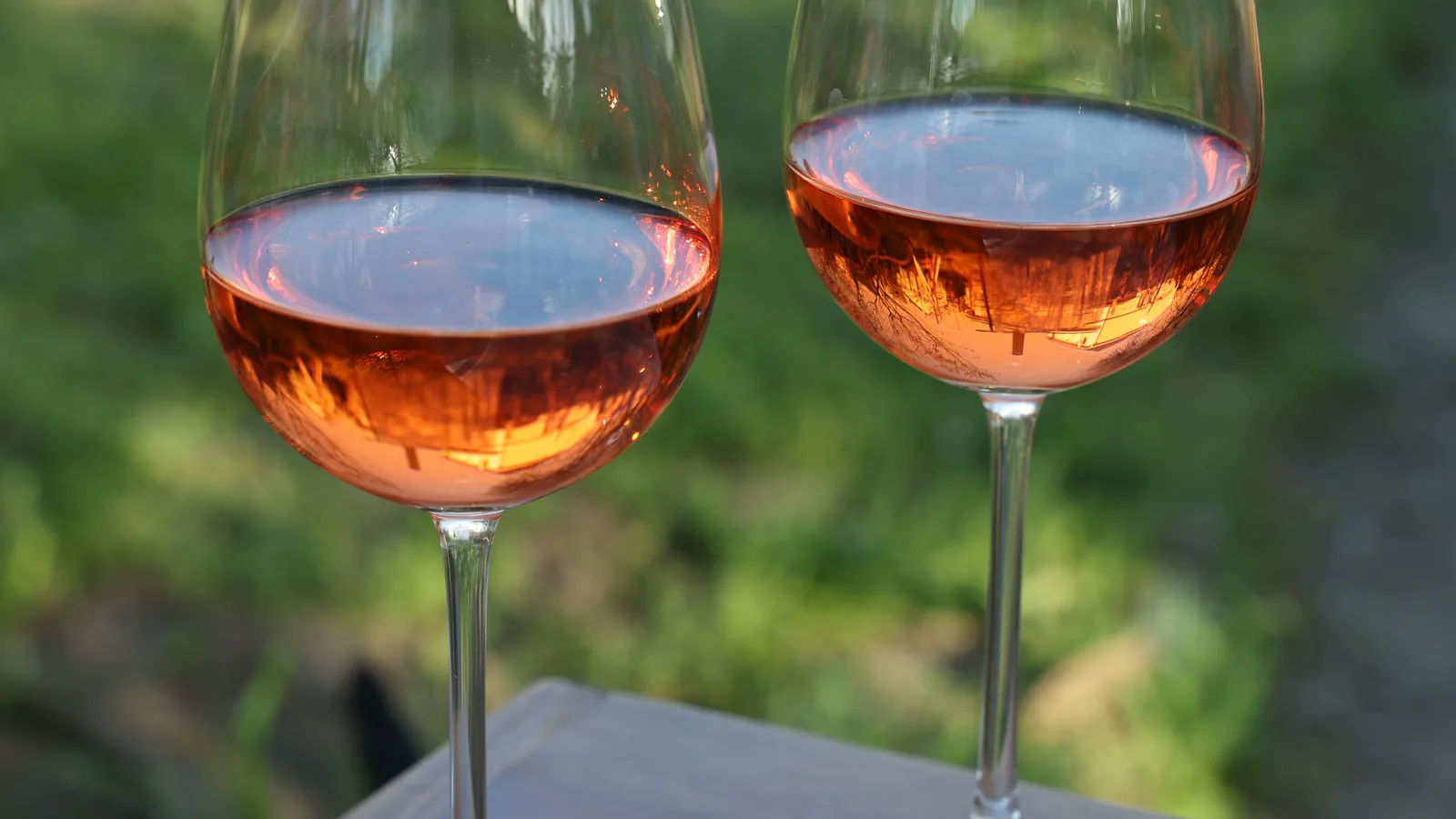
Line up a few bottles of rosé and you will see a spread of colors, from a pale, barely-there pink to something close to light red. The reason is not a recipe of red wine poured into white. It comes down to one variable the winemaker controls closely: how long the juice touches the grape skins.
Where the pink comes from
The juice inside almost every wine grape is clear, whether the skin is green or black. Conseil Interprofessionnel des Vins de Provence (CIVP), the trade council for Provence, the French region best known for rosé, explains that the color pigments sit only in the skins of black grapes. Leave the juice on those skins longer, or at a warmer temperature, and more color moves in. Separate them quickly and the juice stays pale.
The council is plain on one point: rosé is not a blend of red and white wine. It is made as rosé from the start, usually from black-skinned grapes, sometimes with a small share of white grapes added for flavor and roundness.
Method one: direct press
In a direct press, whole or destemmed bunches go straight into the press with no soaking time, and the juice is pressed slowly and fermented right away. The juice picks up only a light tint, so these are the palest rosés. The CIVP says the direct-to-press approach is what gives the pale pink wines the region is known for.
Method two: skin contact, or maceration
Maceration means letting the crushed grapes and their juice sit together before pressing. For rosé in Provence, the CIVP describes destemming and crushing the grapes into must (the mix of juice, skins and seeds), then leaving it for 2 to 20 hours at about 61°F to 68°F (16°C to 20°C). When the color reaches what the winemaker wants, the must is pressed. Fermentation follows at a cool temperature and runs about a week on average.
That 2-to-20-hour window is where much of the color range comes from. A few hours gives a light pink. A long soak gives a deeper one, along with more flavor drawn from the skins.
Method three: saignée
Saignée is French for bleeding. A winemaker making a red wine draws off part of the juice from the tank after a few hours of skin contact and ferments that portion separately as rosé. The CIVP puts the share at about 5% to 15% of the juice, with the rest finished as red. The council notes that Provence itself does not use this method, while other regions do. Because the juice has already sat on red-wine skins for a while, saignée rosés often come out darker.
Other things that shift the color
- The grape: some varieties carry more pigment in their skins than others.
- Ripeness and vineyard site: the CIVP lists the condition and ripeness of the harvest, the varieties and their proportions in a blend, and the vineyard among the factors that set a rosé's style.
- Age: the council notes that rosé shifts from bright pink toward a salmon tinge as it ages.
Does a darker rosé mean a sweeter one?
Not by itself. Color tells you mostly about skin contact. Rosé comes in dry, medium-sweet, sweet and sparkling styles, and the CIVP does not tie any of those to a particular shade. To check sweetness, read the back label or the producer's description rather than the color through the glass.
A word on Provence
Provence is the region most associated with pale rosé, and the numbers explain why. The CIVP reports that the region dedicates 91% of its vines to rosé, produces 40% to 45% of France's appellation rosé and makes about 5% of the world's rosé. On a US shelf, you will see rosés from many other places too, labeled with the class designation rosé wine, which the Alcohol and Tobacco Tax and Trade Bureau (TTB) requires in place of the color word alone.
Try this
Buy two or three rosés that look clearly different in color, say one very pale and one deep pink. Check each producer's website for how it was made: direct press, a few hours of skin contact, or saignée. Taste them side by side at cellar temperature and see whether the deeper one feels fuller. It is the quickest way to connect the color in the glass to the choices in the cellar.
Loading comments…