






Every word on the front of an American wine bottle is backed by a federal rule, and most of those rules come down to a percentage. The Alcohol and Tobacco Tax and Trade Bureau (TTB) approves wine labels and enforces the regulations in Title 27 of the Code of Federal Regulations, part 4. Once you know four or five numbers, a label tells you a lot more.
What every label has to show
TTB lists the required pieces: a brand name; a class or type designation (such as red wine, rosé wine or a grape variety); the name and address of the bottler or importer; the net contents, such as 750 milliliters; a sulfite declaration when the wine has 10 parts per million or more of sulfur dioxide; the government warning statement; and, in many cases, the alcohol content and an appellation of origin.
The grape name: 75%
A wine labeled with a single grape, such as Merlot or Chardonnay, must be at least 75% that grape under 27 CFR 4.23, and all of that 75% must have been grown in the place named on the label. The remaining 25% can be other grapes, and the label does not have to say which.
There are exceptions. Wine from Vitis labrusca grapes, the native American species that includes Concord, can carry the variety name at 51%, with a statement on the label saying it contains not less than 51% of that grape (unless it reaches 75%). TTB can grant the same 51% rule to other varieties it finds too strongly flavored at 75%.
When a label names two or more grapes, every grape in the wine must be one of those listed, and each one's percentage must be shown, within 2 percentage points.
The place: 75% or 85%
A grape name, a vintage year or the words estate bottled all require an appellation of origin, which is the place the grapes came from. TTB sets the minimum share by type of place:
- Country (American), state or county: at least 75% from grapes grown there.
- Two or three states or counties together: all of the grapes from those places, with each one's percentage on the label.
- American Viticultural Area (AVA): at least 85% from grapes grown inside the AVA. An AVA is a grape-growing region TTB has formally defined by its geography, such as the Napa Valley or the Willamette Valley.
So a bottle that says California is at least three-quarters California fruit, while one that names an AVA is at least 85% from that specific area.
The year: 85% or 95%
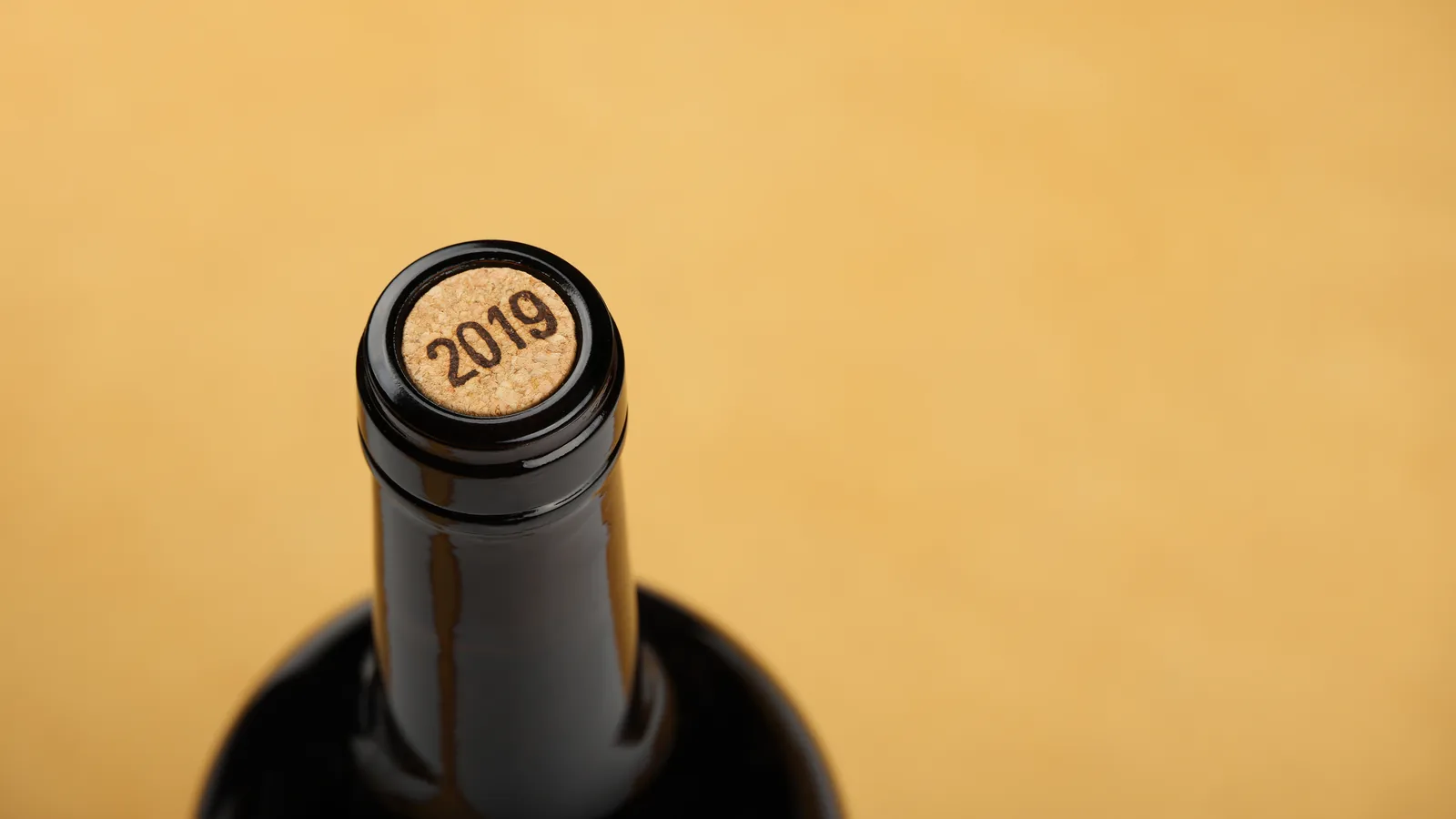
A vintage date is the year the grapes were harvested, not the year the wine was bottled. Under 27 CFR 4.27, a wine labeled with an AVA must get at least 95% of its volume from grapes picked in that year. With any other appellation, such as a state or county, the minimum is 85%. A vintage date also requires an appellation on the label.
Estate bottled
Estate bottled is the only term allowed on a label to mean the winery both grew the grapes and bottled the wine, according to 27 CFR 4.26. To use it, the wine must carry an AVA appellation and the winery must:
- be located inside that AVA;
- have grown all of the grapes on land it owns or controls inside the same AVA; and
- have crushed, fermented, finished, aged and bottled the wine in one continuous process, without the wine ever leaving its premises.
Controlled has a specific meaning: a lease or similar agreement of at least three years under which the winery does all of the farming. Grapes grown by members of a cooperative winery count as the cooperative's own.
Alcohol: the tolerance window
Under 27 CFR 4.36, wine over 14% alcohol by volume must state its alcohol content. Wine between 7% and 14% may leave it off if the label uses the designation table wine or light wine. When the number is stated, it has some leeway:
- For wine at 14% or less, the actual alcohol can be up to 1.5 percentage points above or below the label.
- For wine over 14%, the tolerance is 1 percentage point either way.
The tolerance cannot cross the 14% line, because wine above and below it falls in different tax classes. A bottle labeled 13.5% can contain anywhere from 12% to 14%, but not more.
Put it to work
Next time you are in a wine shop, pick up two bottles of the same grape, one naming only California and one naming an AVA such as the Russian River Valley or Paso Robles. You now know the second one has a tighter rule behind its place name (85% versus 75%) and, if it shows a year, behind its vintage too (95% versus 85%). Check for the words estate bottled, then read the alcohol line with that 1.5-point window in mind.
Loading comments…