










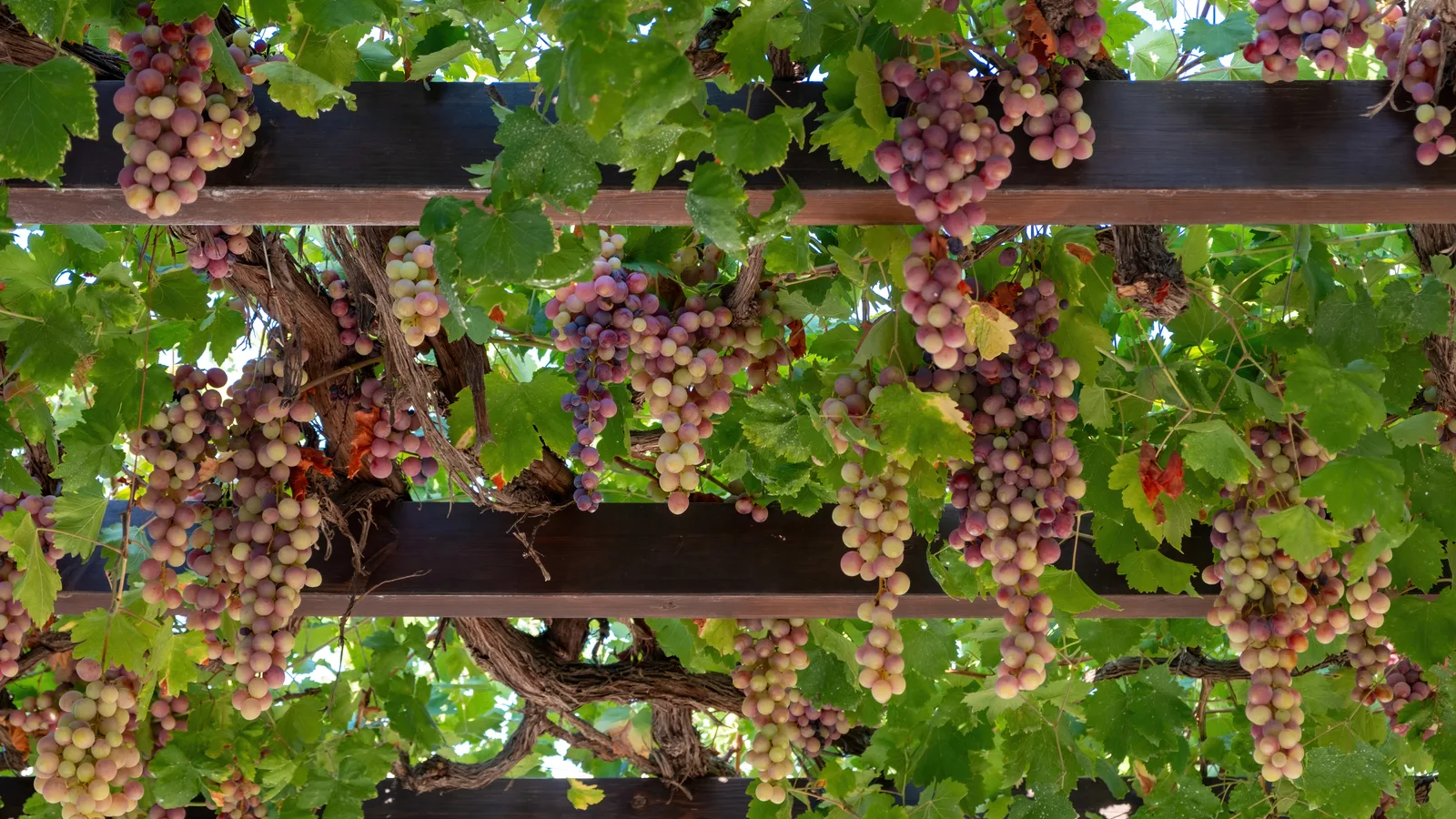
If you have seen a Japanese white wine on an American list or shelf, the grape was very likely Koshu. It is the variety Japan's wine industry is built around, it has a story that runs back along the Silk Road, and it makes a style of white that is light, low in alcohol and quietly savory. Here is what to know before you open one.
A grape with a long road behind it
Koshu is a pink-skinned grape used to make white wine. Yamanashi Prefecture, west of Tokyo and home to most of Japan's Koshu, describes it in its own wine guide as a cross between the European wine grape, Vitis vinifera, and wild grape species from China. The prefecture says a DNA analysis published in 2013 confirmed both lines of ancestry, which fits the long-held view that the grape traveled east from the Caspian region along the Silk Road and reached Japan roughly a thousand years ago.
Its thick skin is part of why it has lasted. Japan's summers are hot and humid, which encourages rot in thin-skinned grapes, and Koshu's tougher skin lets it ripen there. In 2010 Koshu was registered with the International Organisation of Vine and Wine (OIV), the intergovernmental body for wine, which made it possible to name the grape on wines exported to the European Union.
Yamanashi, and what GI Yamanashi means
Yamanashi sits in the Kofu Basin, ringed by mountains, with clear weather, relatively little rain and a wide swing between warm and cool periods. Commercial winemaking in Japan began there in the 1870s, and the prefecture says it has more wineries than any other in Japan, upward of 30 percent of the country's total. The core of the industry is in the east of the basin, around the cities of Koshu, Yamanashi and Fuefuki.
In 2013 Japan's National Tax Agency, which regulates alcohol in Japan, designated Yamanashi as the country's first geographical indication for wine. A bottle marked GI Yamanashi is made from grapes grown in the prefecture and has met the indication's production standards. It is the closest Japanese equivalent of an appellation on a French label.
What Koshu tastes like
Koshu wine is usually pale, light in body and modest in alcohol, often around 11 to 12 percent. Expect delicate citrus such as yuzu and white grapefruit, white peach and a faint floral note, with crisp acidity and a slightly bitter, almost tea-like grip at the end that comes from the pink skin. Yamanashi's own description puts it as subtle in scent and flavor with a hint of astringency.
Producers make it in several ways, and the label often tells you which:
- Sur lie: aged on its spent yeast for extra texture and a fuller, savory edge. This is the most common style on export markets.
- Barrel-aged: rounder and richer, with some oak.
- Skin contact: left on the pink skins for a time, giving an amber or orange tint and more grip.
- Sparkling: a smaller category, made in both traditional and tank methods.
What to eat with it
Koshu's lightness and low alcohol make it a natural partner for Japanese food: sashimi, tempura, grilled fish, and dishes seasoned with soy or miso, where its gentle bitterness meets the savory notes. It also works with raw bar platters, steamed vegetables and simple roast chicken, anywhere a big oaky white would be too much.
Finding a bottle
Koshu reaches the United States in small volumes, mostly through importers that specialize in Japanese wine and sake, and it turns up most often at Japanese restaurants and at wine shops with a broad import list. Look for the words Koshu and GI Yamanashi on the label, and ask the shop whether the bottle is a sur lie, barrel or skin-contact style, since the three taste quite different.
Loading comments…