












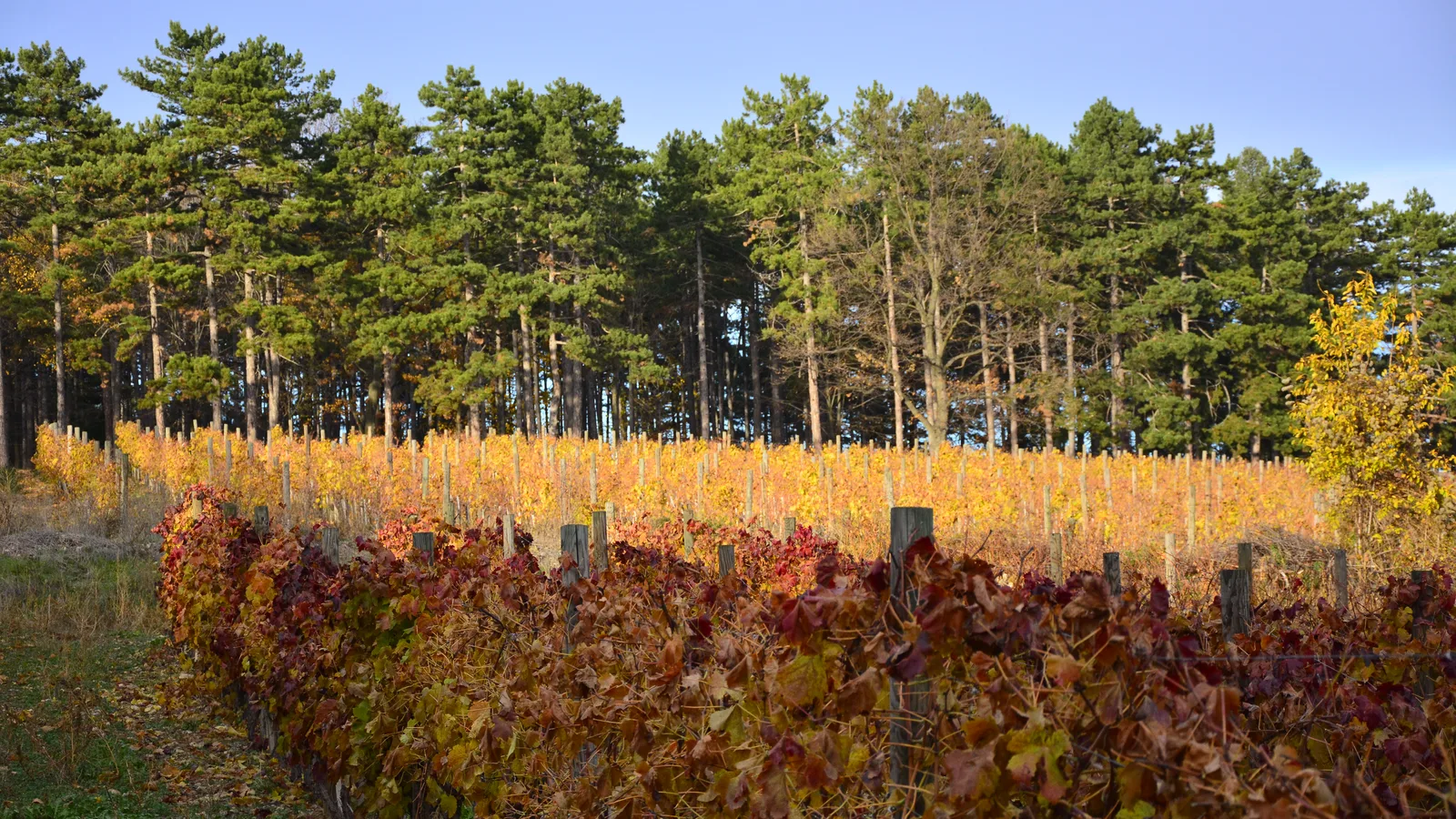
A bottle of wine from the eastern end of Long Island can carry one of three place names on its label, and they are not interchangeable. The Hamptons, the North Fork and Long Island are each an American Viticultural Area, or AVA: a grape-growing region defined in federal regulations, with boundaries written down to the township line. Which one appears on the label tells you where the grapes were grown.
The Hamptons, Long Island (1985)
The South Fork's AVA came first. The Alcohol and Tobacco Tax and Trade Bureau's regulations (27 CFR 9.101) define The Hamptons, Long Island as the townships of Southampton and East Hampton in eastern Suffolk County, including their beaches, shorelines and islands, Gardiners Island among them. It was established in 1985 and amended in 1993.
North Fork of Long Island (1986)
The North Fork followed on October 10, 1986. Its rule (27 CFR 9.113) covers the mainland, shorelines and islands of three townships, Riverhead, Southold and Shelter Island, in eastern Suffolk County. The line starts at Long Island Sound near Wading River, follows the Brookhaven and Riverhead town line south to the Peconic River, and then wraps around the fork to Orient Point. Robins Island, Fishers Island, Plum Island and Shelter Island all fall inside it.
The two forks are separated by Peconic Bay, and that matters to a wine label: a winery on one fork growing grapes on the other cannot simply pick whichever name it prefers.
Long Island (2001)
The newest and largest of the three, the Long Island AVA (27 CFR 9.170), was established on May 15, 2001. It covers all of Nassau and Suffolk counties, including every offshore island in them, about 1,170 square miles (749,146 acres). Both forks sit inside it.
That overlap is the point. A wine blended from North Fork and Hamptons grapes qualifies for neither fork's name, but it can be labeled Long Island.
What the name on the bottle guarantees
Federal labeling rules (27 CFR 4.25) set the bar. When a label names an AVA, at least 85 percent of the wine must come from grapes grown inside that AVA's boundaries. When a label names only a state, such as New York, the minimum is 75 percent from that state.
So, reading from the most specific name to the broadest:
- North Fork of Long Island or The Hamptons, Long Island: at least 85 percent of the grapes from that fork.
- Long Island: at least 85 percent from Nassau and Suffolk counties, from either fork or both.
- New York State: at least 75 percent from anywhere in the state. Some of the grapes could come from the Finger Lakes or the Hudson River region.
The same logic applies upstate. Our guide to Finger Lakes Riesling covers the state's largest wine region.
Using it at the shop or the tasting room
If you want a wine that tastes of one fork, look for the fork's own name rather than Long Island alone. If you are visiting, ask the tasting room which wines are estate grown and which AVA each one carries; the answer tells you whether the grapes came from the vineyard outside the window. Plan the ride home before the first pour: a driver, a tour or a car service.
Loading comments…