





Few grapes swing as widely as Chardonnay. One bottle is full, rich and toasty; the next is lean, bright and almost stony. Same grape, very different wine. Most of the swing comes from two winemaking choices, oak and a second fermentation called malolactic, and you can usually spot both before you reach the register.
What oak does
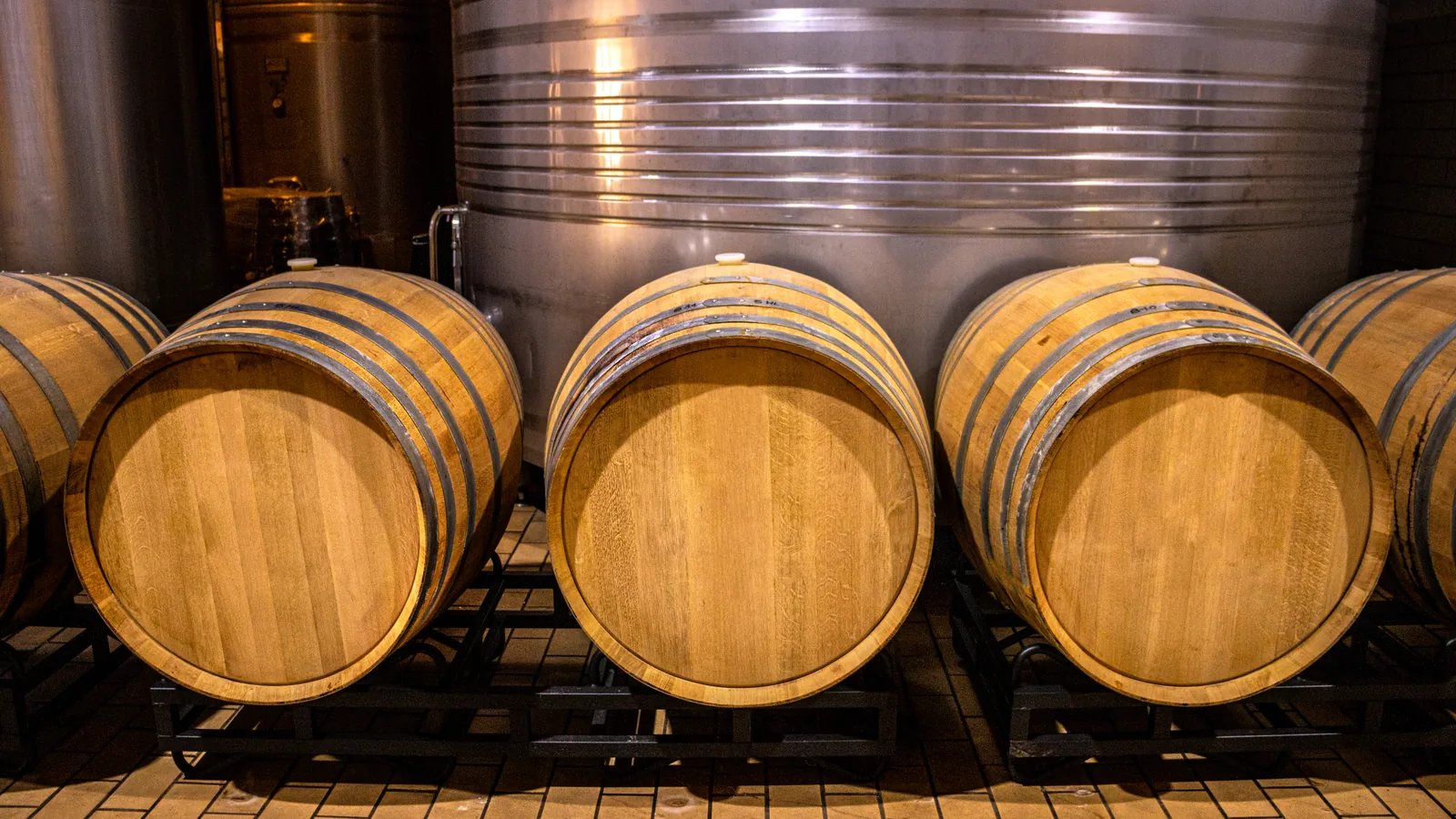
Winemakers can ferment and age Chardonnay in stainless steel tanks or in oak barrels. Steel is neutral: it keeps the wine fresh and lets the fruit and acidity speak. Oak, especially new oak, adds flavor and texture of its own, so oaked Chardonnay tends to read as rounder and fuller, with toast and vanilla-like notes.
Old barrels give much less than new ones. The Bureau Interprofessionnel des Vins de Bourgogne, which runs the official Chablis site, notes that Chablis has no tradition of new oak and that winemakers there often keep the share of new barrels low so the vineyard's character comes through.
The butter question: malolactic fermentation
After the main fermentation turns sugar into alcohol, many wines go through malolactic fermentation, often shortened to malo. Oregon State University Extension explains that bacteria, mainly a species called Oenococcus oeni, convert sharp malic acid (the acid in green apples) into softer lactic acid, which lowers the wine's acidity.
The same process can produce diacetyl, the compound behind a buttery aroma. Oregon State notes that the amount depends on the bacterial strain and on conditions in the cellar, and that a winemaker who wants that buttery note will run malo after the main fermentation with a strain known to make more diacetyl. A winemaker who wants less can run it at the same time as the main fermentation, which keeps diacetyl low.
So the rich, buttery, oaky style is a recipe, not an accident. UC Davis Foundation Plant Services traces what it calls the California style of Chardonnay to riper grapes, malolactic fermentation and aging in oak barrels together. UC Davis also notes that criticism of heavier examples pushed some producers toward a crisper style, fermented in steel with higher acidity.
Region clues on the label
Chablis. All Chablis is Chardonnay, grown in northern Burgundy along the Serein valley. The region has four appellations: Petit Chablis, Chablis, Chablis Premier Cru and Chablis Grand Cru. The Chablis interprofession says oak is used sparingly there, mostly for Premier Cru and Grand Cru wines and not always even for those, and that most Chablis does go through malolactic fermentation. In practice, a bottle labeled Petit Chablis or plain Chablis is a reasonable bet for the crisper, less oaky end of the range, while a Premier Cru or Grand Cru may or may not have seen barrels.
Climate. UC Davis notes that Chardonnay from cooler sites comes out lighter and crisper with higher acidity, while warmer sites give fuller-flavored wines. A cool region on the label hints at a leaner style before any oak decision is made.
California. Chardonnay is California's most widely planted wine grape, according to UC Davis, so every style is on the shelf. Here the region alone tells you less, and the back label and the winery's notes tell you more.
Words to look for
- Toward rich and toasty: barrel fermented, aged in oak, a stated share of new oak (for example, 40% new French oak), full malolactic.
- Toward crisp and fresh: unoaked, stainless steel, no malolactic or partial malolactic.
- No clue on the bottle: many producers publish a technical sheet (often called a tech sheet) on their website for each wine and vintage, listing the fermentation vessel, the oak regime and whether the wine went through malo. A quick search of the wine's name plus tech sheet usually finds it.
Your next step
Next time you shop, decide first which end of the scale you want. For crisp, ask for a Petit Chablis, a village Chablis or a bottle that says unoaked or stainless steel. For rich and toasty, look for barrel fermented or new oak on the back label, or ask the staff which California Chardonnays on the shelf went through full malolactic. If the label says nothing, open the producer's tech sheet on your phone right there in the aisle.
Loading comments…