






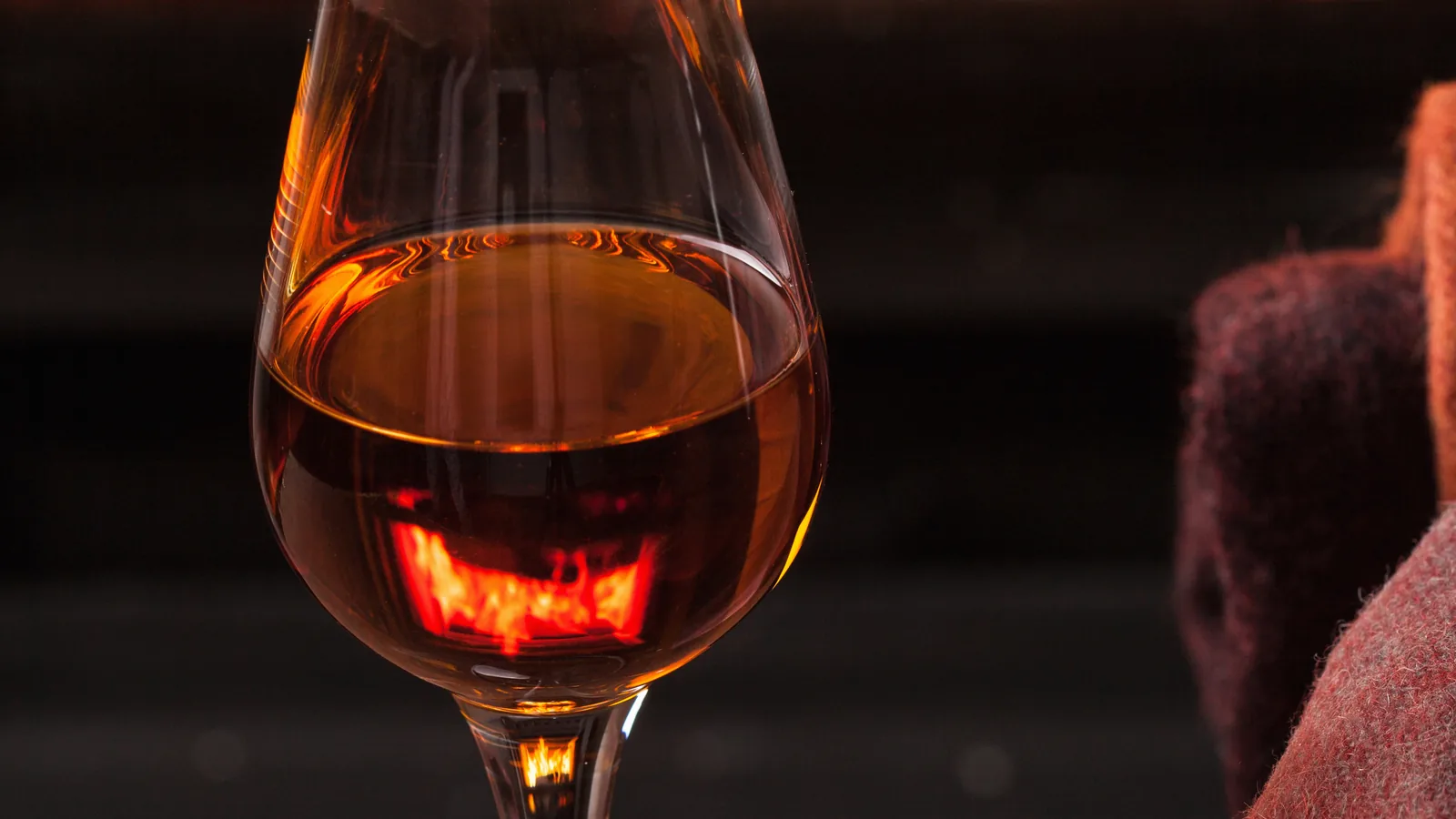
Port is a fortified wine (one with grape spirit added) from Portugal's Douro Valley, and a bottle often comes out after a holiday meal. The labels can be puzzling, though: ruby, tawny, LBV, Colheita, 10 Years Old. Each word describes how long the wine spent aging and where. Here is what each one means, drawing on the Instituto dos Vinhos do Douro e do Porto (IVDP), the public body that regulates Port.
How Port is made
Port is made in the Douro Demarcated Region in northern Portugal. The IVDP explains that the grape juice starts fermenting like any wine, and then grape brandy is added partway through. The brandy stops the fermentation, leaving natural grape sugar in the wine and raising the alcohol, usually to between 19% and 22% by volume. The wine is then blended and aged.
From there, Port splits into two families, and the difference is all about aging.
The ruby family: kept young and fruity
Ruby-style Ports are made to hold on to the deep red color and fresh fruit of a young wine. The IVDP lists four ruby categories:
- Ruby: the basic, youthful style.
- Reserve: a blend of higher-quality Port selected from a given year, still young, fruity and intense.
- Late Bottled Vintage (LBV): a ruby from a single year, bottled after four to six years in wood. Some LBVs are ready to drink when sold, while others keep aging in the bottle, so the IVDP suggests checking the label.
- Vintage: made from a single year's harvest and bottled two to three years after it. The IVDP calls it the only Port that ages in the bottle, and says it can age there for 10 to 50 years before drinking.
The tawny family: aged in wood
Tawny Ports are blends of wines aged for different lengths of time in casks or vats. Over the years, the IVDP explains, the color fades toward tawny, a brownish amber, and the wine picks up aromas of dried fruit and wood. Tawnies are ready to drink when bottled.
- Tawny and Tawny Reserve: the entry and middle steps, aged in oak.
- Tawny with an indication of age: labeled 10, 20, 30 or 40 Years Old. The IVDP describes the 20-year as showing toasted vanilla and dried fruit, and the 30-year as adding honey, spice and dried peach, while the 40-year is the most concentrated of the group.
- Colheita: a single-vintage tawny, aged in cask for at least seven years.
There are white Ports too, including aged whites with 10 to 40 year age indications, which the IVDP describes as golden, with dried fruit, honey and spice aromas.
Serving temperature
Port is not a room-temperature wine in most homes. The IVDP recommends:
- Ruby styles: 54°F to 61°F (12°C to 16°C)
- Tawny styles: 50°F to 57°F (10°C to 14°C)
- White Port: 43°F to 50°F (6°C to 10°C)
Old Vintage Port throws sediment in the bottle, and the IVDP says it should be decanted carefully before serving. Stand the bottle upright for a day so the sediment settles, then pour slowly into a decanter and stop when the sediment reaches the neck.
How long an open bottle keeps
This is where the two families split the most: the styles aged longest in wood keep longest once opened, and bottle-aged Vintage Port keeps the shortest. The IVDP's guidance for an opened bottle:
- Vintage: 1 to 2 days
- LBV: 4 to 5 days
- Ruby and Ruby Reserve: 8 to 10 days
- Tawny and Tawny Reserve: 3 to 4 weeks
- Tawny or white Port with an age indication, and Colheita: 1 to 4 months, finishing the younger ones first
The IVDP notes that how well a bottle keeps also depends on where it is stored, so recork it and keep it somewhere cool and dark.
Choosing a bottle for the holidays
Think about how fast your group will finish it. If the bottle will be open for a single evening, a Vintage Port makes sense, decanted ahead of time. If it will sit on the counter between Thanksgiving and New Year's, a tawny, especially a 10 or 20 Years Old, is the practical pick, since it keeps for weeks once open. For something in between, an LBV gives you a few days. Ask the shop for the bottling year on an LBV or Vintage label, and serve it slightly cool.
Loading comments…