






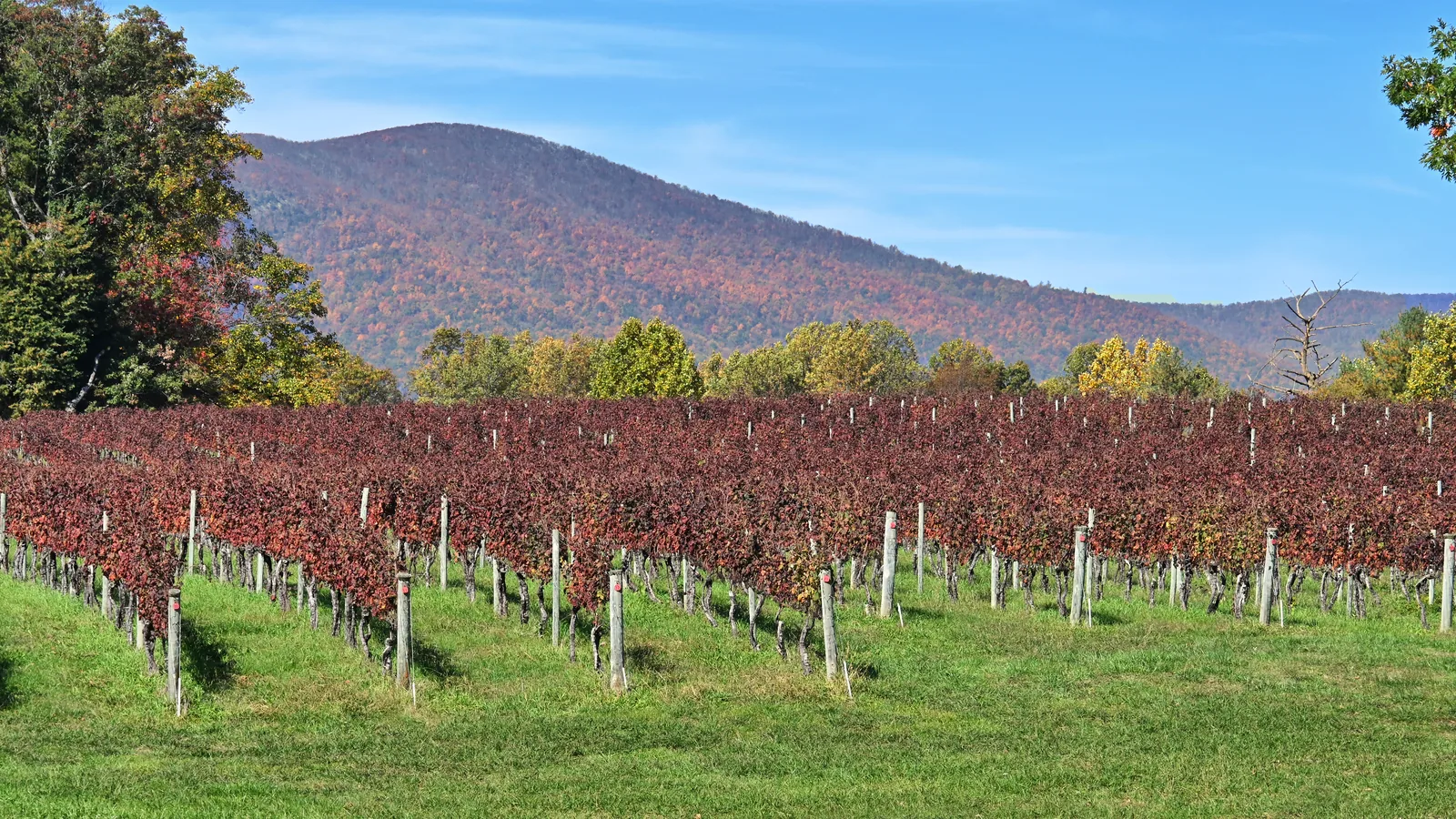
Virginia has been growing wine grapes for a long time, but the shape of its industry today is easiest to read in two documents: the federal list of its American Viticultural Areas, and the state's own count of what is planted. Together they explain where Virginia wine comes from, which grapes it leans on, and where to go to taste it.
The AVAs, by the federal record
An American Viticultural Area (AVA) is a grape-growing region defined by the Alcohol and Tobacco Tax and Trade Bureau (TTB), the federal agency that regulates wine labels. The TTB's list of AVAs by establishment date includes nine that cover part of Virginia:
- Shenandoah Valley (shared with West Virginia), 1982
- Rocky Knob, 1983
- North Fork of Roanoke, 1983
- Monticello, 1984
- Northern Neck George Washington Birthplace, 1987
- Virginia's Eastern Shore, 1991
- Middleburg, Virginia, 2012
- Appalachian High Country (shared with North Carolina and Tennessee), 2016
- Virginia Peninsula, 2021
Two of these matter most to a first-time visitor. The Monticello AVA is centered on Charlottesville in the Piedmont, according to Virginia Tourism Corporation. The Middleburg AVA sits in Northern Virginia, the wine country closest to Washington, DC.
Where the vines actually are
The 2023 Commercial Wine Grape Report, conducted for the Virginia Wine Board with the Virginia Vineyards Association, counted 4,318 acres of wine grapes and 8,916 tons processed that year. The report splits the state into five areas. Central Virginia, which includes the Monticello AVA, holds 39 percent of the acreage. Northern Virginia, home of the Middleburg AVA, holds 30 percent, and the Shenandoah Valley 15 percent. The two biggest counties are next door to those hubs: Albemarle, around Charlottesville, with 779 acres, and Loudoun, in Northern Virginia, with 776.
The Virginia Wine Board's page on the Charlottesville region adds that the area has about 40 wineries, many in the Monticello AVA, and more than a fifth of the state's vineyard plantings.
The grapes Virginia grows
Red grapes made up 62 percent of Virginia's planted acreage in 2023, and vinifera (the European wine grape species) made up 81 percent. Here are the varieties the report counts most, with their 2023 acreage:
- Cabernet Franc, 661 acres. A red grape and, per the report, still the most widely planted variety in Virginia.
- Merlot (463 acres) and Petit Verdot (447 acres). Both red, and both passed Chardonnay in total acreage in 2023, according to the report.
- Chardonnay, 445 acres, the largest white, after losing 123 reported acres in 2023.
- Viognier, 300 acres, the second-largest white grape in the state.
- Cabernet Sauvignon, 276 acres.
- Petit Manseng, 200 acres, a white grape that ranks just behind Viognier among Virginia's whites.
- Norton, 130 acres, the leading American (native) grape in the report.
Hybrid grapes, crosses between European and American species, cover another 643 acres, led by Chambourcin and Vidal Blanc.
How to visit
Virginia Tourism Corporation lists several established wine trails, including the Monticello Wine Trail around Charlottesville, the Shenandoah Valley Wine Trail, the Chesapeake Bay Wine Trail and the Nelson 151 craft beverage trail along the Blue Ridge. It describes the Shenandoah Valley's vineyards as defined by limestone soil, cool nights and high elevation.
Reservations vary. Visit Charlottesville, the area's tourism office, says most wineries there require advance reservations, though some, such as Hazy Mountain for its standard guided tasting, do not. For a winery not on its list, it suggests calling ahead to ask whether it can host your group.
Plan the ride before the tastings. Visit Charlottesville lists transportation and tour companies for the Monticello Wine Trail, including limousine services, trolley tours, hop-on tours and chauffeured cars. Virginia Tourism Corporation's guide names operators by region: Monticello Wine Tour and Coach Co. and Crozet Trolley Co. around Charlottesville; Vineyard Voyages, with bus tours that pick up in DC and Northern Virginia; and Shenandoah Wine Tours, which visits three to four wineries in the valley. Booking a seat on a tour means nobody in your group drives after tasting.
Your next step
Pick a hub, Charlottesville or Loudoun County, and book a tour or driver that serves it. Then look for a Cabernet Franc, a Viognier and a Petit Manseng on the same tasting list: three grapes that show the range Virginia's acreage numbers describe.
Sources
- Alcohol and Tobacco Tax and Trade Bureau: List of AVAs by establishment date
- Virginia Wine Board and Virginia Vineyards Association: 2023 Commercial Wine Grape Report
- Virginia Wine: Commercial Grape Report overview
- Virginia Wine: Charlottesville and the Monticello AVA
- Virginia Tourism Corporation: Your guide to Virginia wineries
- Visit Charlottesville: Wine tours and transportation
Loading comments…