












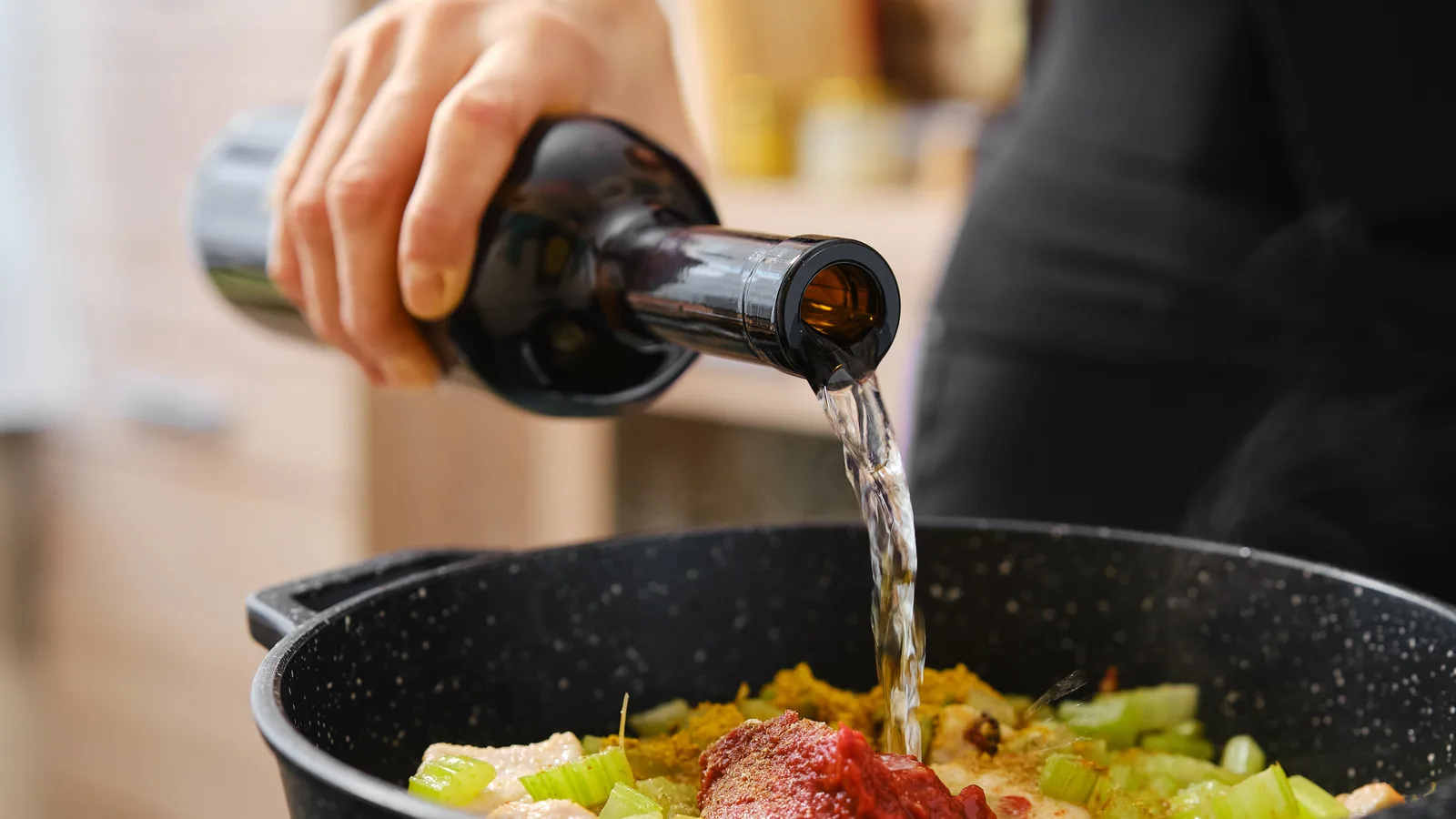
Next to the vinegar in most American grocery stores sits a bottle labeled cooking wine, often marsala, sherry or a dry white. The reason it sits there, rather than in the wine aisle, is in the ingredient list: salt, added on purpose so that nobody would want to drink it. That salt also changes how it behaves in a recipe, which is worth knowing the next time a sauce calls for a splash of wine.
Why the salt is there
Federal regulations let a winery turn wine into a product that is not for drinking. Under 27 CFR 24.215, wine can be made unfit for beverage use, and one recognized form is salted wine, which must contain at least 1.5 grams of salt per 100 milliliters. That works out to about 15 grams per liter, or at least 11 grams of salt in a 750 ml bottle.
Once wine has been treated that way, it is nonbeverage wine. When it leaves the winery free of the beverage tax, its containers have to be marked to show that it is not for sale or consumption as beverage wine. That is what lets salted cooking wine sit on a grocery shelf alongside the soy sauce rather than in the wine aisle.
What it means for your cooking
The added salt is the main thing to plan around. A recipe written for regular wine assumes the wine brings acidity and flavor, not salt. If you use salted cooking wine:
- Hold back the salt elsewhere until the end, then taste and adjust. A cup of salted wine reduced in a pan concentrates that salt further.
- Read the label. The ingredient list and the nutrition panel show how much sodium it carries, which varies by brand.
- Be careful with reductions. Pan sauces and braises that cook wine down by half or more are where the salt is most noticeable.
Using a regular bottle instead
Many cooks use a regular, inexpensive wine instead, because it adds the wine's acidity and fruit without the extra salt and leaves the seasoning to you. For most savory recipes, a dry wine works: a crisp, unoaked white for chicken, fish, risotto and cream sauces, and a simple, dry red for beef and tomato-based braises. A sweet wine makes a dish sweeter.
A practical bonus: the rest of the bottle can go on the table with the meal it helped make, which is the simplest pairing rule there is.
Loading comments…